Su-Kam Solar archive collage — field projects across India. Period marketing piece, not a single-site photograph.
Most people discovered solar energy when the government started offering subsidies. Kunwer Sachdev discovered it because Indian homes had no reliable electricity — and he needed to fix that problem to keep his cable TV amplifiers running.
That accidental encounter in the late 1990s led to one of the most consequential technology journeys in Indian industry: the invention of affordable solar inverters, the commercialisation of hybrid solar PCUs, the installation of tens of thousands of DC solar systems in rural Uttar Pradesh, and 77 patents filed at Su-Kam across India and the United States.
This is not a story about vision statements. It is a story about product decisions, manufacturing bets, and the unglamorous work of making solar power accessible to ordinary Indian families — years before it became a buzzword.
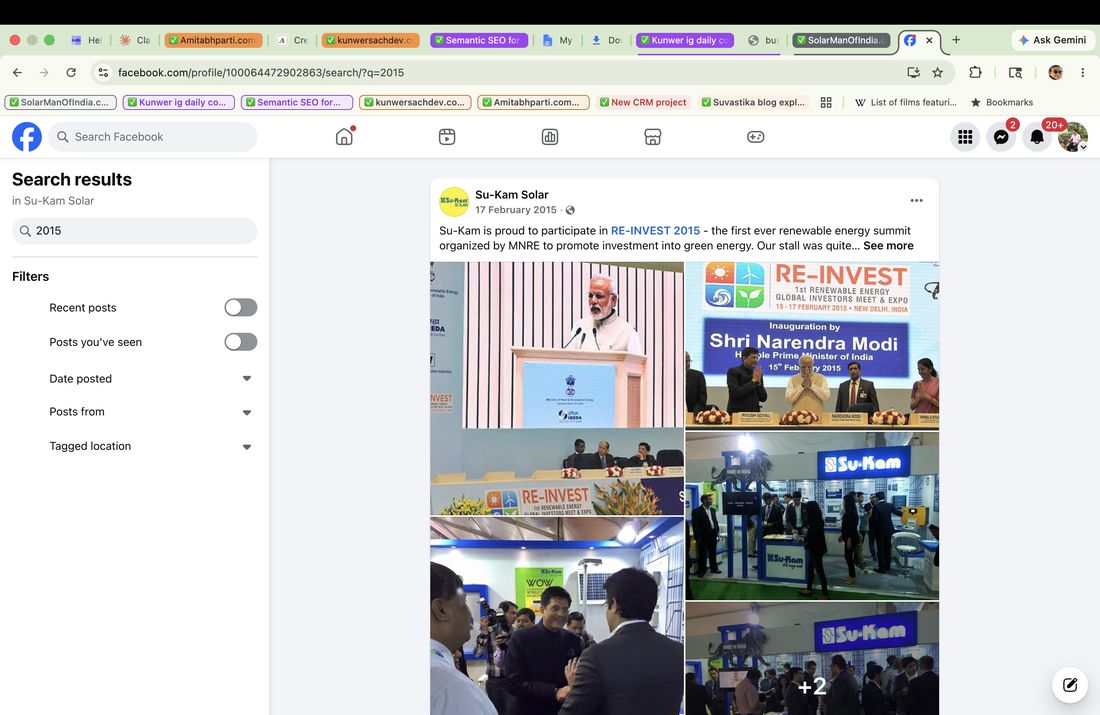
Su-Kam at RE-INVEST 2015 — India's first renewable energy summit, inaugurated by PM Narendra Modi
The First Innovation: Making Solar Affordable to Touch
Before solar, Kunwer Sachdev had already changed India's inverter industry. In 2000, he introduced India's first plastic-body inverter — replacing heavy, dangerous metal enclosures with lightweight, living-room-safe units. India Today called it the "Innovation of the Decade."
That same logic — make it safe, make it affordable, make it something a family can actually use — governed everything he would later do in solar.
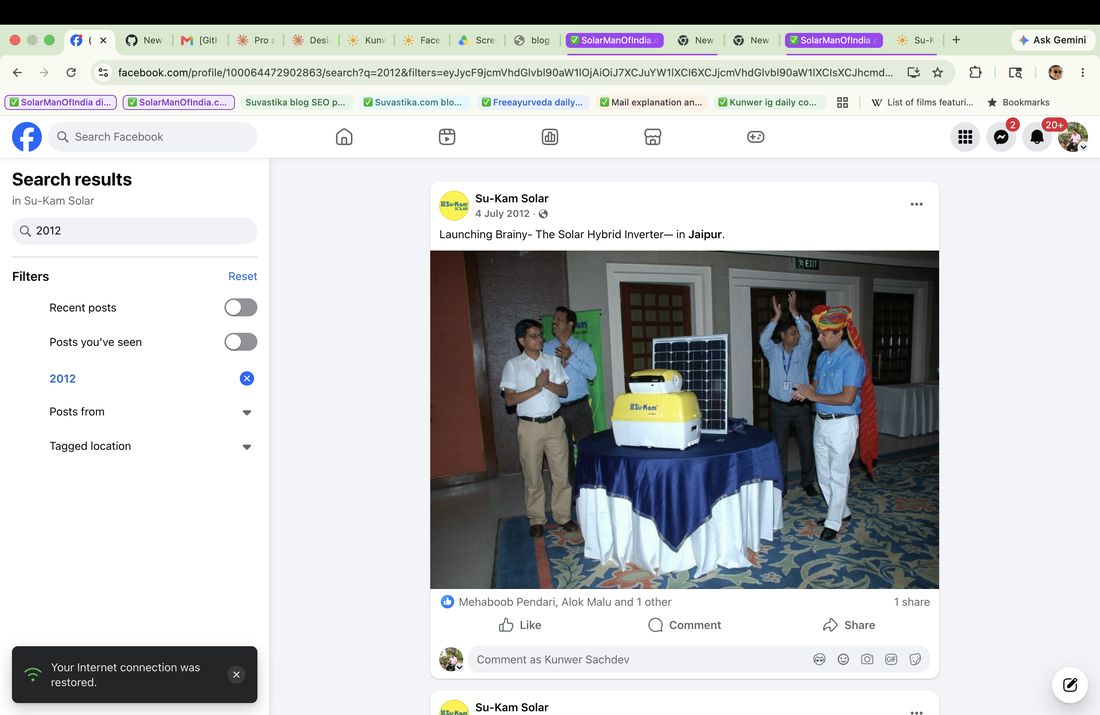
Launching the Brainy Solar Hybrid Inverter in Jaipur, 2012
2003–2005: The Solar Home Lighting System and the Birth of Home UPS
Between 2002 and 2005, Su-Kam launched three inventions that would define the direction of the entire power-backup industry. The first was India's first DSP sine-wave inverter. The second was the Solar Home Lighting System — one of India's earliest consumer solar products for homes with partial or no grid access. The third was "Home UPS" — a product category that Su-Kam created and the entire industry adopted within a year.
"We didn't wait for the grid to reach people. We built products that worked without the grid — or alongside it."
2009: India's First Hybrid Solar PCU — Before the World Had a Name for It
In 2009, Kunwer Sachdev's team built what is now called a "hybrid solar inverter" — a system that combines solar input with grid charging and intelligent switching to maximise solar usage while maintaining battery backup. They built it, patented it, and sold it. The rest of the world caught up about a decade later.
The patents are filed and searchable in public databases. The full patent archive is documented here.
The Solar Installations That Changed Rural India
Technology patents are proof of invention. Installations are proof of scale. Su-Kam under Kunwer Sachdev executed both.
One of the most significant projects was a deployment of approximately 40,000 DC solar systems across Uttar Pradesh — one of India's most power-deficient states. These were working solar systems in rural homes, installed and maintained through Su-Kam's dealer and technician network.
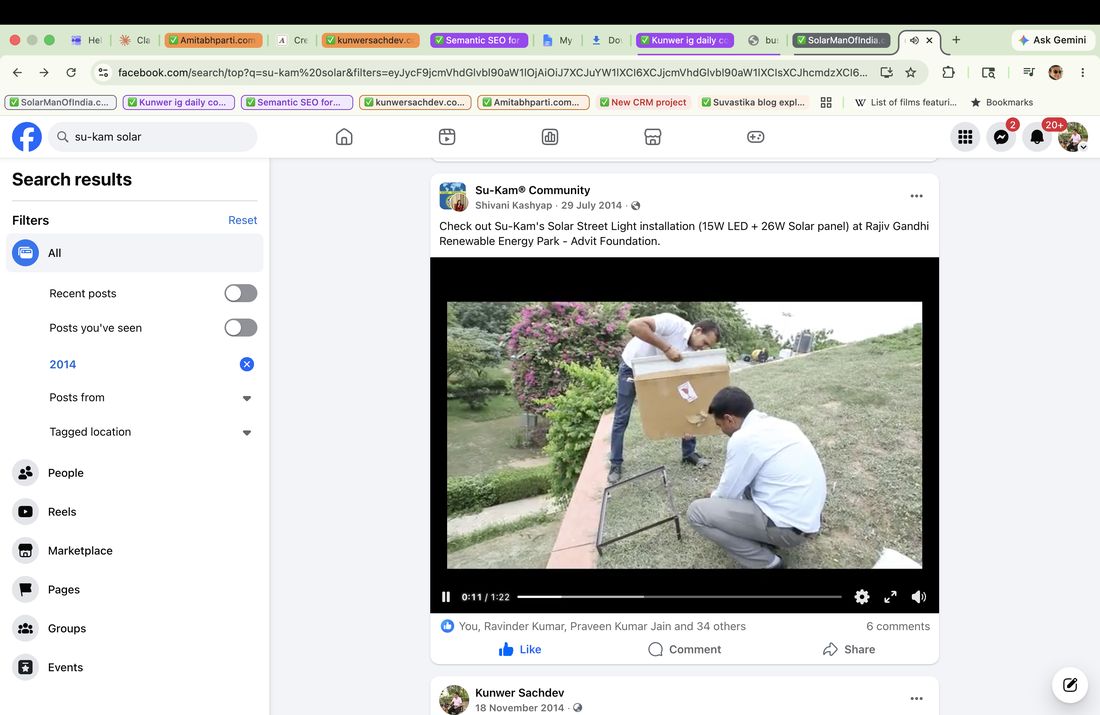
Su-Kam Solar Street Light installation — Rajiv Gandhi Renewable Energy Park, 2014
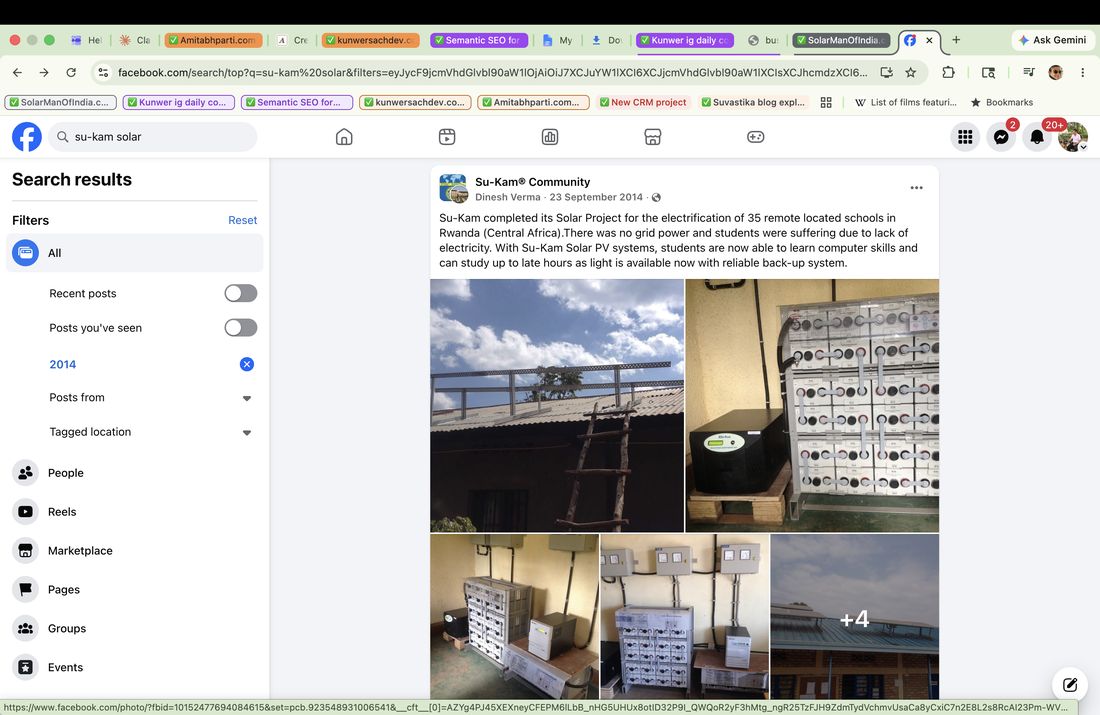
Su-Kam solar electrification of 35 remote schools in Rwanda, Central Africa — proof of the 90+ country footprint
Building India's First Solar Community — Online, in 2009
Su-Kam was India's first inverter company on YouTube and one of the earliest to build a large solar community on Facebook. By 2009, the Su-Kam Facebook page had grown to 143,000 followers — solar technicians, dealers, and curious homeowners sharing knowledge years before solar became a mainstream policy priority.
Global Recognition: WIPO and India Today
India Today named Kunwer Sachdev's plastic-body inverter the "Innovation of the Decade." WIPO — the World Intellectual Property Organisation, a UN body — interviewed him as a model of Indian innovation in intellectual property.
Still Inventing: Su-Vastika and the Next Chapter
Kunwer Sachdev has not retired. At Su-Vastika, he continues to file patents in lithium-ion battery technology, DC solar systems, and next-generation online UPS products. The pioneer timeline on this site documents the full arc — from Su-Kam's founding in 1988 to the current work at Su-Vastika.
For the complete body of his writing — on entrepreneurship, technology, IBC reform, and the future of solar — his personal blog is at kunwersachdev.com.
"I didn't set out to build an industry. I set out to solve a problem I could see with my own eyes — homes without reliable power. Everything else followed from that." — Kunwer Sachdev
Verify Everything
This archive is built on verifiable sources. The patents are in public databases. The YouTube videos from Kunwer Sachdev's tenure are on the @sukam channel (archived). The Facebook posts are archived on this site. The Su-Kam Facebook community — 143,000 members, built starting 2009 — is a matter of public record.
If you are a researcher, journalist, or policy maker documenting India's solar history, the verification page links every claim to its primary source.
- kunwersachdev.com — Personal Blog & Thought Leadership
- Patents Archive — SolarManOfIndia.com
- Pioneer Timeline — SolarManOfIndia.com
- Legacy — SolarManOfIndia.com
- Verification — SolarManOfIndia.com