The Solar PCU
How a Meeting in Tamil Nadu Changed Indian Solar Forever
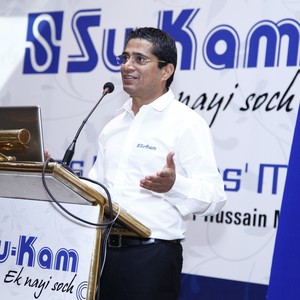
Kunwer Sachdev
Solar Man of India
Founder of Su-Kam Power Systems (1998–2019). Took solar to 90+ countries, built India's largest solar dealer network, and won the ISA Technovation Award. Now documenting the untold story of India's solar revolution.
Every revolutionary product has an origin story. For Su-Kam's Solar Power Conditioning Unit — the device that would win the ISA Technovation Award, take Su-Kam to Intersolar Europe in Munich, and ultimately define the company's identity as India's solar pioneer — that story begins around 2007, in a government office in Tamil Nadu.
The Man from TEDA
The Tamil Nadu Energy Development Agency (TEDA) was the state government's vehicle for renewable energy deployment. In 2007, it was headed by an IAS officer named Sudeep Jain, a BITS Pilani-trained electrical engineer who would later rise to become Additional Secretary at the Ministry of New and Renewable Energy (MNRE) and pursue a PhD in solar energy at IIT Madras.
Jain's ambition was specific. He wanted smaller solar PCUs — power conditioning units that could serve rural Tamil Nadu households — in capacities ranging from 300 watts to 2 kilowatts. Not the large industrial systems that dominated the market. Compact, affordable units that could bring reliable solar power to villages where the grid was unreliable or absent.
Su-Kam's team in Tamil Nadu connected Kunwer Sachdev with Jain, and the two struck a chord immediately. Both men shared the same conviction: solar energy in India would not succeed as a luxury product for urban rooftops. It had to work at the village level, at the smallest scale, for the poorest households.
The Impossible Specification
What followed was one of the most technically demanding product development projects Su-Kam had ever undertaken.
Sachdev and Jain worked together to create joint specifications for the new Solar PCU. The device had to do what no Indian solar product had done before: not just convert and store solar energy, but monitor and record generation data. TEDA needed proof that the systems were working — actual kilowatt-hour data from each installed unit.
The challenge was enormous. This was 2007-2008. Rural Tamil Nadu had no internet connectivity. No cloud infrastructure, no IoT ecosystem, no cellular data networks reaching remote villages. The monitoring data couldn't be uploaded — it had to be stored locally, inside the processor of each Solar PCU, and physically collected by field teams.
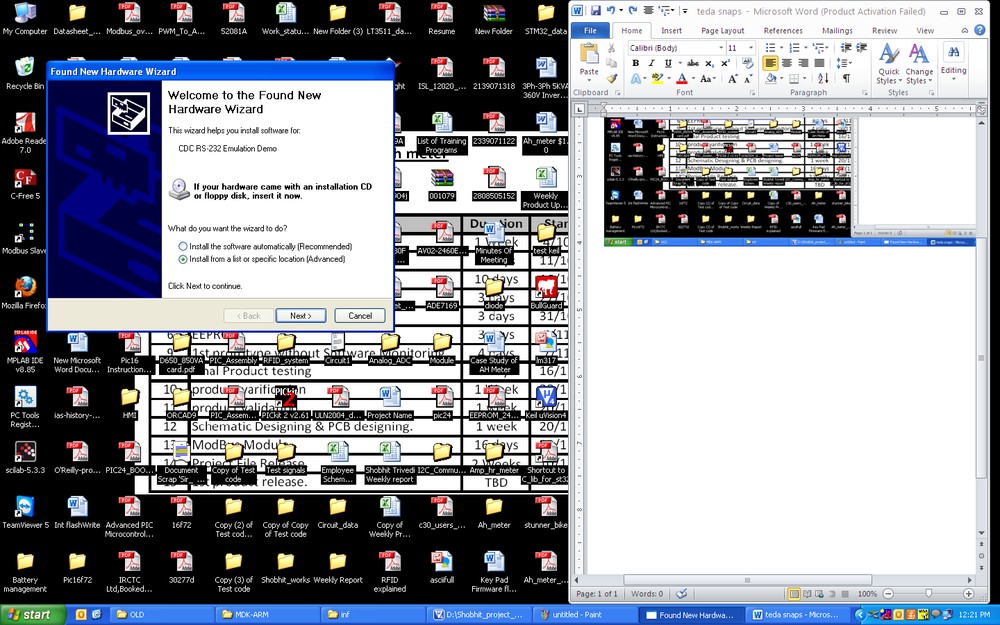
Su-Kam's R&D team had to engineer a solar inverter that was simultaneously a power conditioning unit, a charge controller, a grid interface, and a data logger — all in a compact, affordable package. The communication protocol alone specified 26+ telemetry parameters transmitted in exactly 114 bytes.
"That was very tough to develop," Sachdev recalls. "The specifications were joint — what TEDA needed and what we could engineer. The monitoring requirement pushed our R&D beyond anything we'd done before."
The Breakthrough
Under Sachdev's direct guidance, Su-Kam's R&D team worked through the technical challenges methodically. The Solar PCU that emerged was unlike anything on the Indian market. It integrated the solar charge controller, the inverter, and the grid charger into a single unit — eliminating the need for separate components.
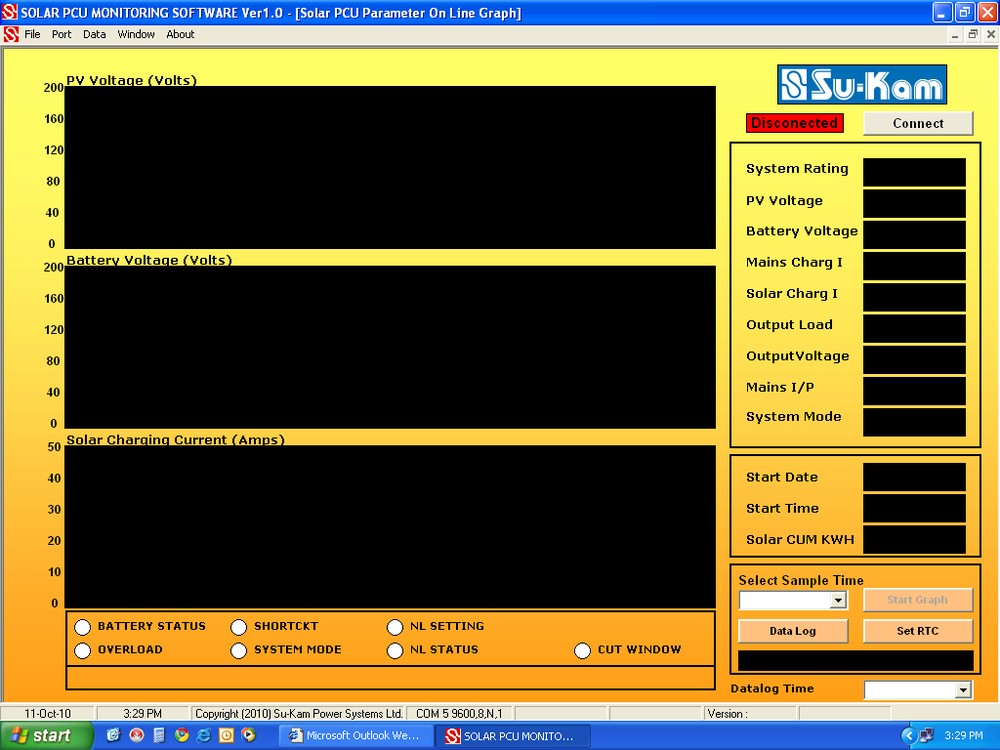
By 2010, the TEDA project was a success. Su-Kam's Solar PCUs were deployed across rural Tamil Nadu, and the generation data TEDA needed was being collected from every unit. The handheld data collection device that Su-Kam designed specifically for this project became the bridge between remote installations and TEDA's data requirements.
As Sachdev puts it: "That project made us heroes. After that, there was no looking back."
The Sudeep Jain Connection
There is a certain poetry in the fact that Sudeep Jain — the IAS officer whose vision pushed Su-Kam to create the Solar PCU — went on to become Additional Secretary at MNRE. Under his later leadership at TEDA, Tamil Nadu installed three lakh solar rooftops and one lakh solar streetlights in four years.
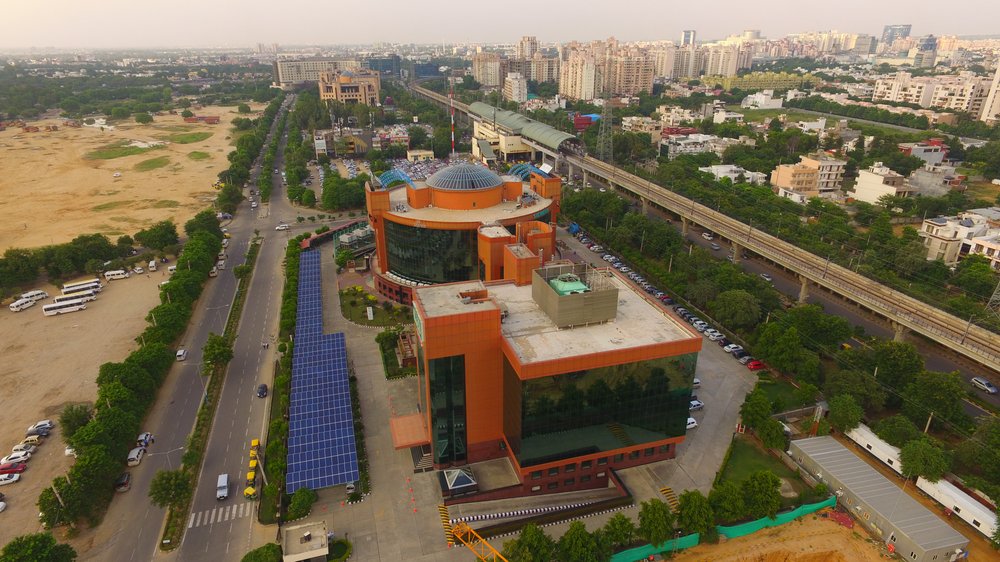
The Solar PCU story is a rare example of what happens when a visionary bureaucrat and a determined entrepreneur find each other. Jain had the policy mandate and the technical understanding. Sachdev had the R&D capability and the manufacturing scale. Together, they created a product that didn't just serve a government tender — it created a category.
Every Solar PCU that Su-Kam sold after 2007 — to dealers across India, to institutions, to villages, to international markets in 90 countries — carried the DNA of that original TEDA specification.
A meeting in Tamil Nadu. A shared vision. A product that changed everything.
Solar PCU Series
Read Part 2: The Handheld Device Story | Part 3: The PCU Goes Global
Disclaimer
Kunwer Sachdev has no association with Su-Kam Power Systems Ltd. in its current form and is not responsible for any products, services, warranties, or obligations of the company. Su-Kam was subject to NCLT insolvency proceedings (2019–2022) and is now under different ownership.
This article is based on Kunwer Sachdev's firsthand account, documented Facebook posts, blog entries from the official Su-Kam Solar page, and publicly available information about TEDA and MNRE.
References & Sources
- Kunwer Sachdev — Wikipedia
- Su-Kam Power Systems — Wikipedia
- Sudeep Jain, IAS — Windergy India
- Tamil Nadu Energy Development Agency — Wikipedia
- How Kunwer Sachdev Sparked a Solar Revolution — InverterIndia
- Kunwer Sachdev Awards and Accolades
- Hand-Held Device User Manual — Su-Kam R&D Document
- TEDA 600VA 24V Communication Protocol — Su-Kam R&D Document
- Solar PCU Monitoring Software V2.0 — Su-Kam R&D Document