The HLS1210: Where Our Solar Home Lighting Journey Began
A compact 3 kg solar lighting system that proved off-grid homes didn’t need to stay in the dark.
First documented: June 16, 2022 · Su-Kam Power Systems
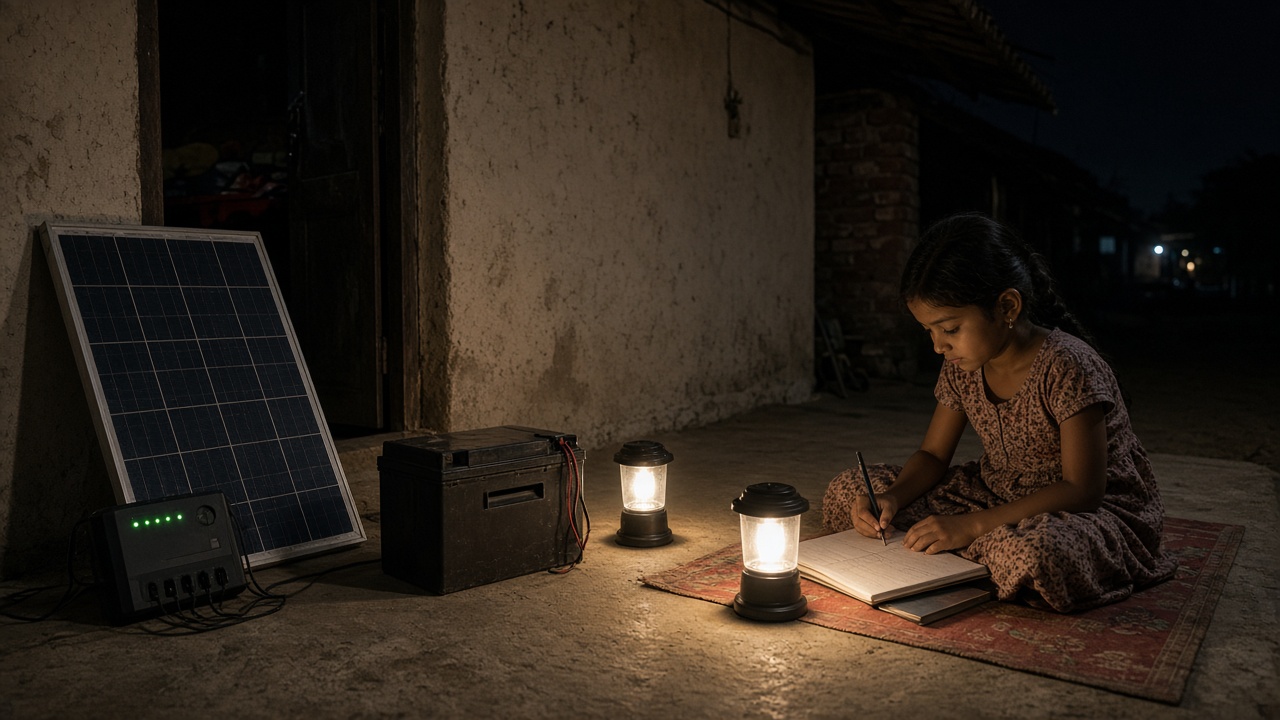
Before the MPPT controllers, before the data logging, before the government certifications — there was the HLS1210. Our first solar home lighting system was deliberately simple: a compact box, two LED lamps, a solar panel, and enough engineering to keep the lights on night after night. It was the product that taught us everything we needed to know about building for off-grid homes.
The Problem
Hundreds of millions of households across India and the developing world lack reliable electricity. Kerosene lamps are expensive to run, hazardous, and dim. Grid extension moves slowly and costs more than rural communities can bear. What people needed was a self-contained system that could charge from the sun during the day and deliver dependable light through the night — without an instruction manual.
Our Answer: The HLS1210
The HLS1210 was built around a single imperative: protect the battery. In off-grid deployments, a dead battery means darkness — possibly for days. Every circuit in the system served this goal.
The charge controller used a common-negative series regulator with a two-stage profile — bulk charging at 14.0V to fill the battery efficiently, then float charging at 13.75V to maintain it without overcharging. Low voltage disconnect kicked in at 11.2V, with recovery at 11.8V. That 0.6V hysteresis window was carefully tuned: wide enough to prevent deep discharge damage, narrow enough to avoid nuisance cutoffs that would frustrate users.
Idle current: just 5mA. In a system that might sit for days during monsoon season, the controller’s own power draw had to be negligible.
We packed in every protection the cost envelope allowed: reverse current blocking from battery to panel, PV and battery reverse polarity protection, overcharge and deep discharge cutoffs, output overvoltage limiting, and electronic short circuit protection. The user interface was two LEDs. Green = charging. Red = low battery. No manual required.
Battery Backup That Changed Daily Life
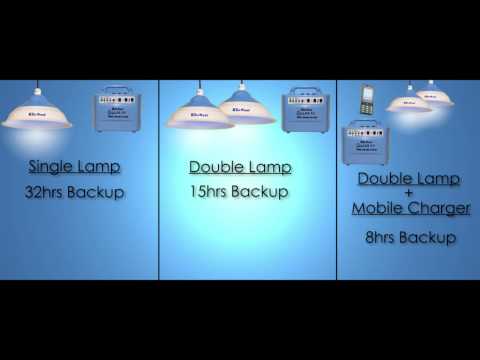
The system used two 6V/4.5Ah sealed batteries in series, paired with a 3W, 5W, or 10W solar panel. Fully charged, it delivered:
The 5V output for radio and mobile charging was a small addition on the spec sheet. In the field, it turned out to be transformative. In off-grid communities, a charged phone isn’t a gadget — it’s connectivity, commerce, and safety.
The entire system weighed 3 kg. Green LED = charging. Red LED = low battery. That was the user interface. No manual needed.
Full Technical Specifications
| Parameter | Specification |
|---|---|
| Model | HLS1210 |
| Topology | Series regulator (Common Negative) |
| Battery | 12V (6V/4.5Ah × 2 in series) |
| Solar Panel | 3W / 5W / 10W at 16.5–17V |
| Charge Time (10W) | 1 day (good insolation) |
| Max Charging Current | 600mA (10W) / 300mA (5W) |
| Bulk / Float Voltage | 14.0V / 13.75V |
| LVD / Recovery | 11.2V / 11.8V |
| Charger Efficiency | >80% |
| Idle Current | 5mA |
| Radio/Mobile Supply | 5V |
| Operating Temp | 0°C to +40°C |
| Dimensions | 230 × 128 × 62 mm |
| Weight | 3 kg |
What It Taught Us
The HLS1210 was never meant to be the final word in solar home lighting. It was the first word. Deploying it across real households revealed what no lab test could: the series regulator left solar energy on the table without MPPT tracking. There was no way to monitor performance remotely. No data logging meant no early warning before failures. And without grid-tie capability, the system was limited to fully off-grid locations.
Each of these lessons became a requirement for the next generation. The HLS1210 became the foundation on which we built increasingly sophisticated systems — systems with MPPT controllers, true sine wave inverters, energy metering, and data logging capabilities. But the core philosophy it established — protect the battery, design for the harshest environment, keep the interface simple — has never changed.
Su-Kam Solar Home Lighting — Watch It in Action
Videos from the official Su-Kam Solar YouTube channel showcasing our solar home lighting technology.
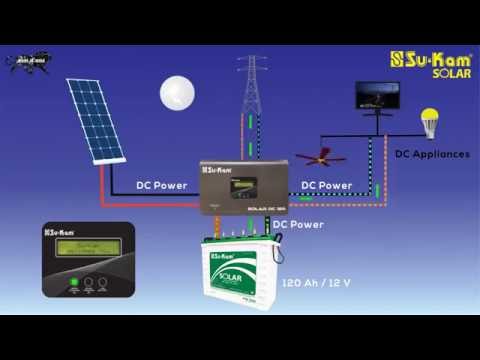
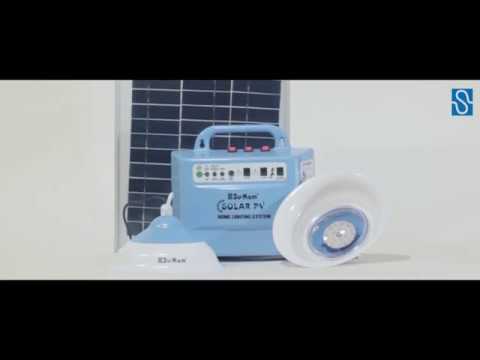
The HLS1210 was the beginning. A 3 kg box with two LEDs and a solar panel that proved off-grid lighting could be reliable, affordable, and simple enough for anyone. Everything we’ve built since carries its DNA.