When No One Wanted Solar, We Put 1 MW on PEC’s Roof.
SECI tender. CREST Solar City. Grid-tied rooftop at Punjab Engineering College — capacity as the media wrote it: 1 MW.
By Kunwer Sachdev · CEO & Managing Director, Su-Kam (at the time) · Founder 1988–2018 · Updated September 28, 2026 · Historical era: tender Jan 2014 · commissioned 2015
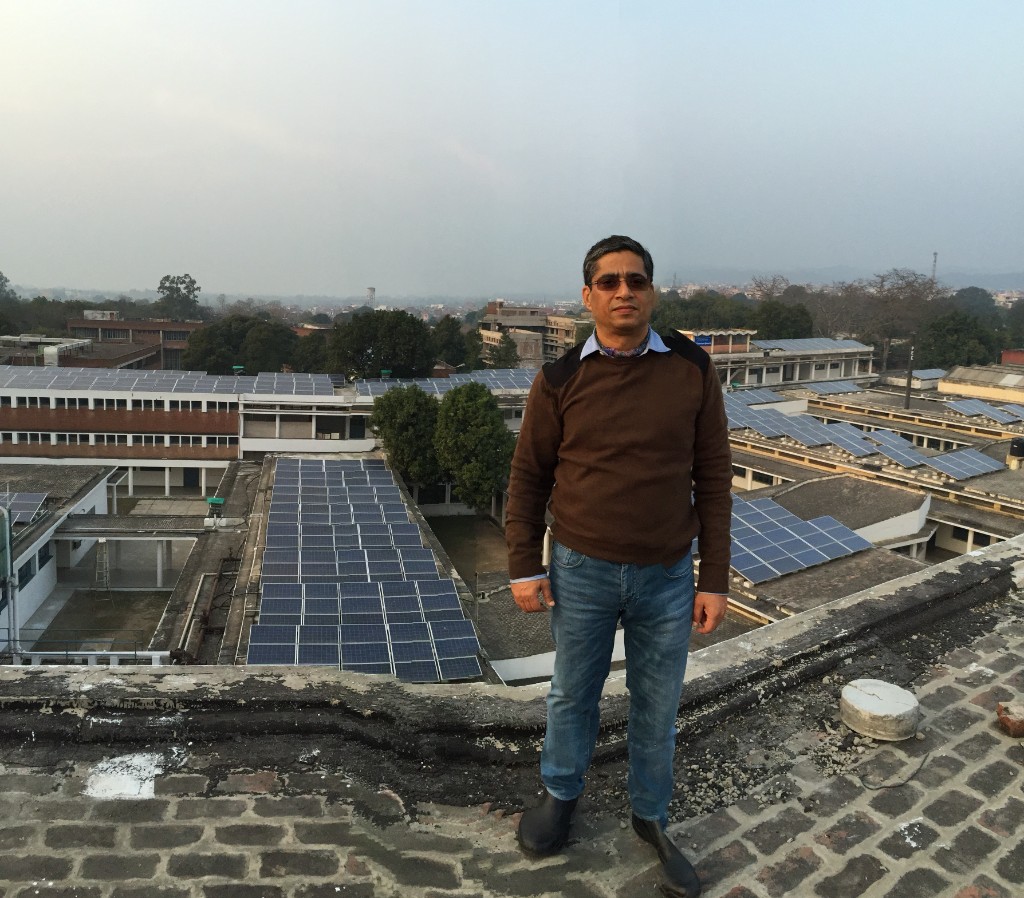
Long-form founder essay (primary) — When No One Wanted Solar on KunwerSachdev.com. This page is the SolarManOfIndia archive spine: media figures, images, Discovery embed, and backlinks. Capacity here follows contemporaneous press: 1 MW.
In January 2014, under my leadership as CEO & MD, Su-Kam won a SECI tender to design, install, commission and maintain a grid-tied rooftop solar plant at Punjab Engineering College, Chandigarh — for ten years. On paper it was a landmark. In reality it was one of the hardest things we ever did — not because of the engineering, but because almost no one in India wanted solar at that time.
I have told that story in full on KunwerSachdev.com. What follows here is the verified public spine — what the newspapers and trade desk wrote, what Discovery filmed, and why PEC still sits at the start of our institutional map.
What the media wrote — 1 MW
Late January 2014, IT Voice and Energetica India reported that Su-Kam had bagged a project to commission a 1 MW solar power plant for PEC — set up and maintain for ten years, work to commence February 2014, won through open tender against serious competition. The same window put it inside CREST’s master plan to make Chandigarh a Solar City.
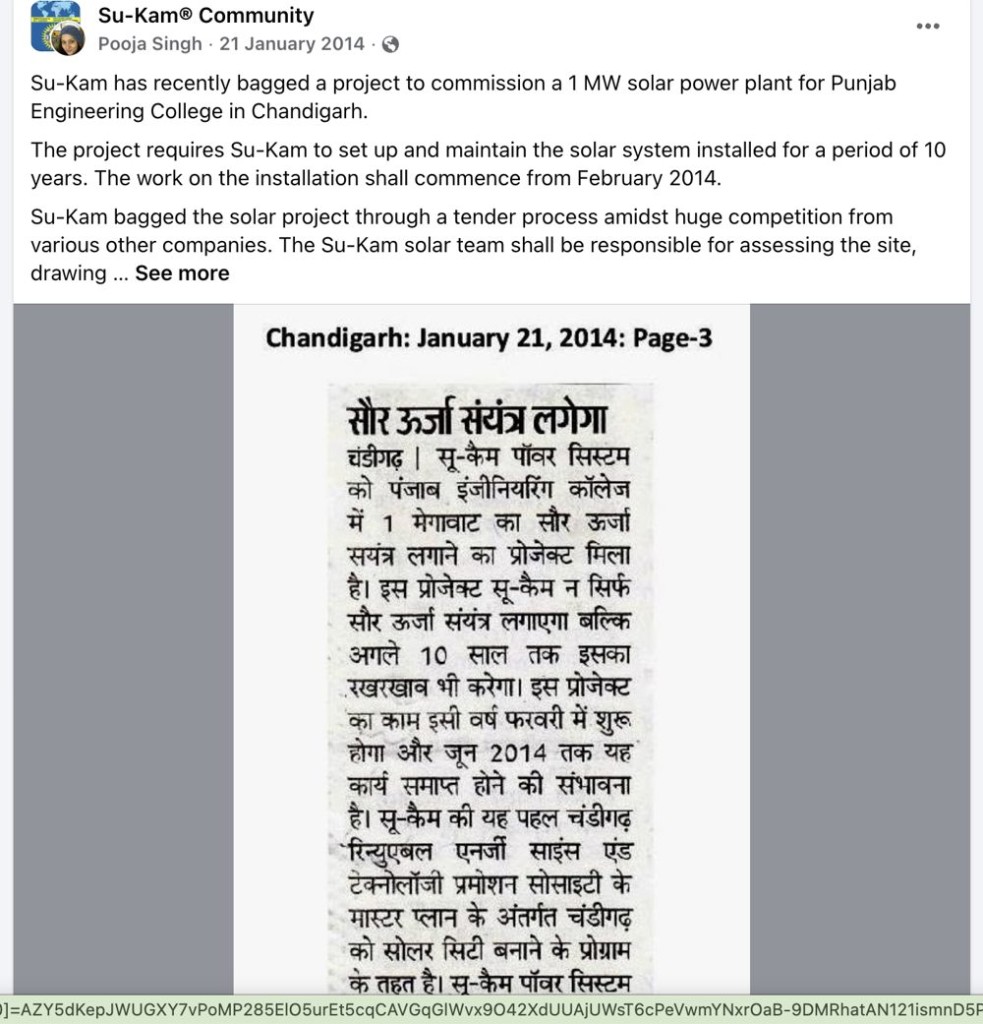
That clipping is why I refuse to treat PEC as folklore. Dealers and journalists saw the same sentence at the same time: 1 MW, one college, one decade of responsibility. Later trade notes called it among the largest solar plants at an educational institute — Energetica said so in print while naming the PEC job. This page does not reopen capacity arguments. It follows what the media wrote.
A market that did not exist yet
SECI was pushing grid-connected rooftop — plant feeds the utility, no battery room in the middle — when modules were expensive, subsidies thin, net metering barely alive, and banks had no history to underwrite. Hosts feared roof damage and empty promises. Most companies would have waited for the market to mature. We didn’t. We stayed, we executed, we delivered. The hard-lessons chapter — shadows, missing installers, audits that did not exist — is in the KS essay and the projects chronicle.
What got built — and filmed
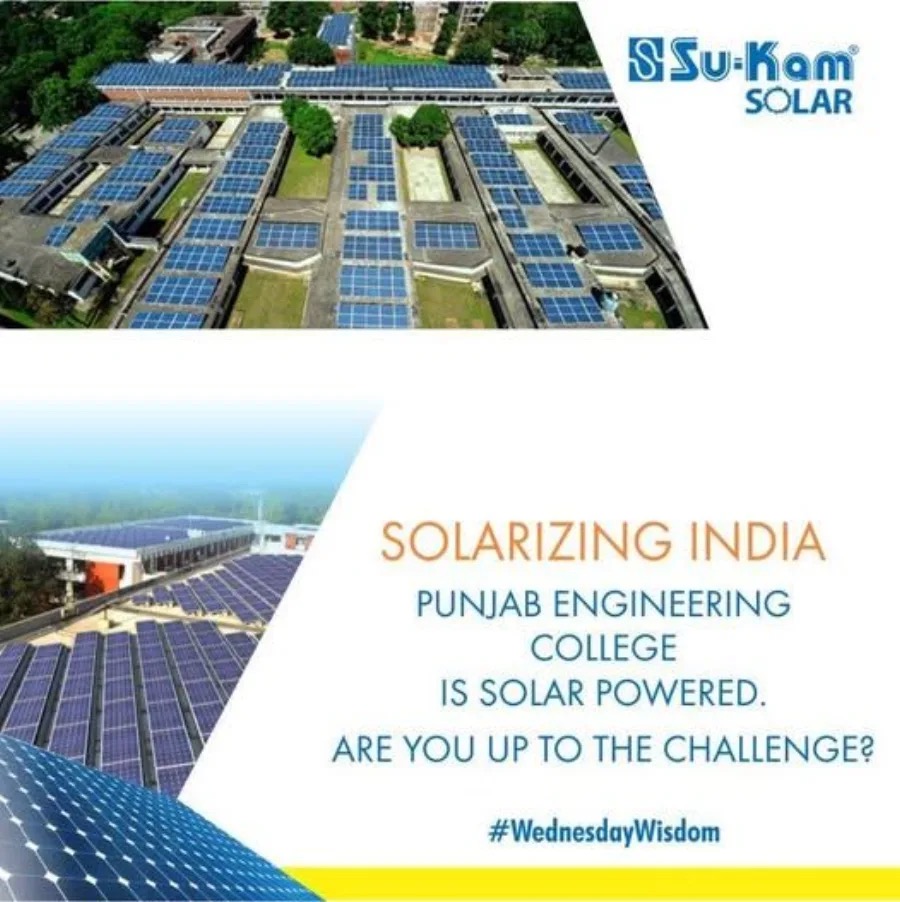
The founder essay records commissioning by October 2015, a serious share of campus electrical load on solar, and roughly ₹1 crore annual savings framing — plus a dedicated control room on campus. Discovery Channel’s Sun Fuel put those roofs on national television and interviewed PEC’s own leadership. That matters: the client on the record, not only the contractor.
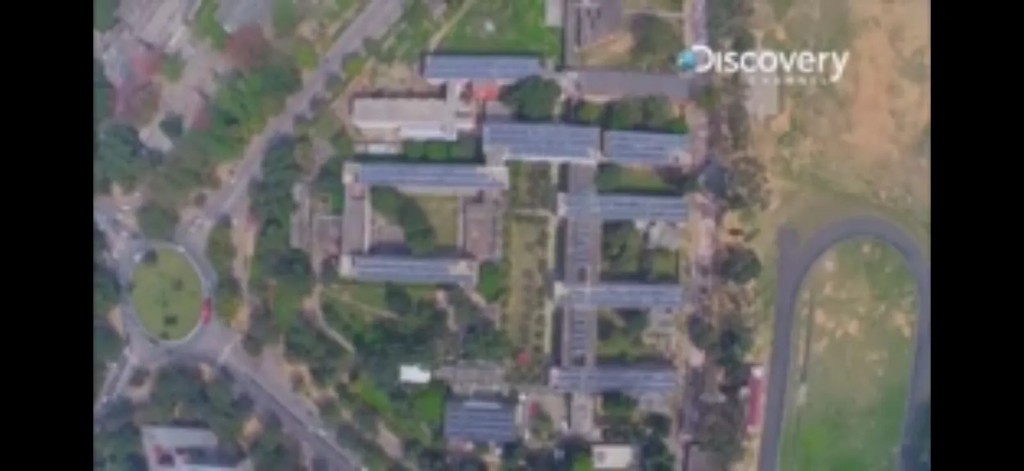
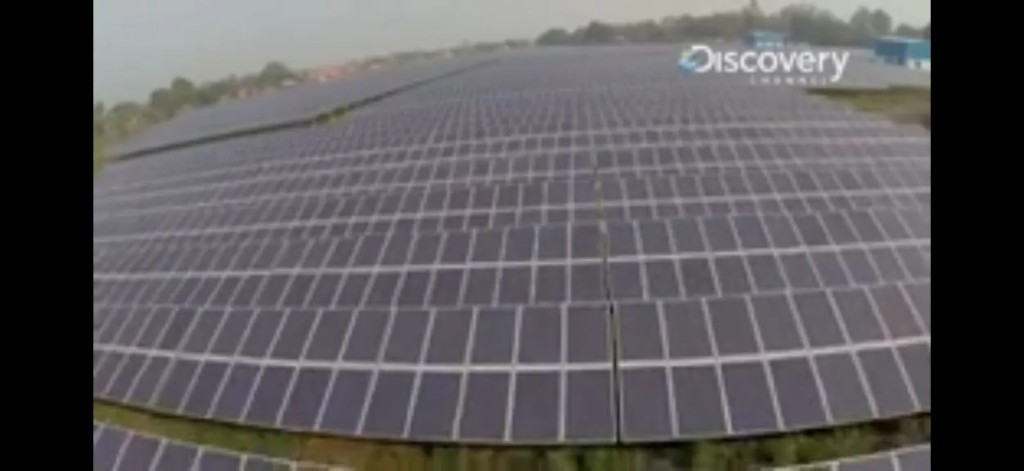
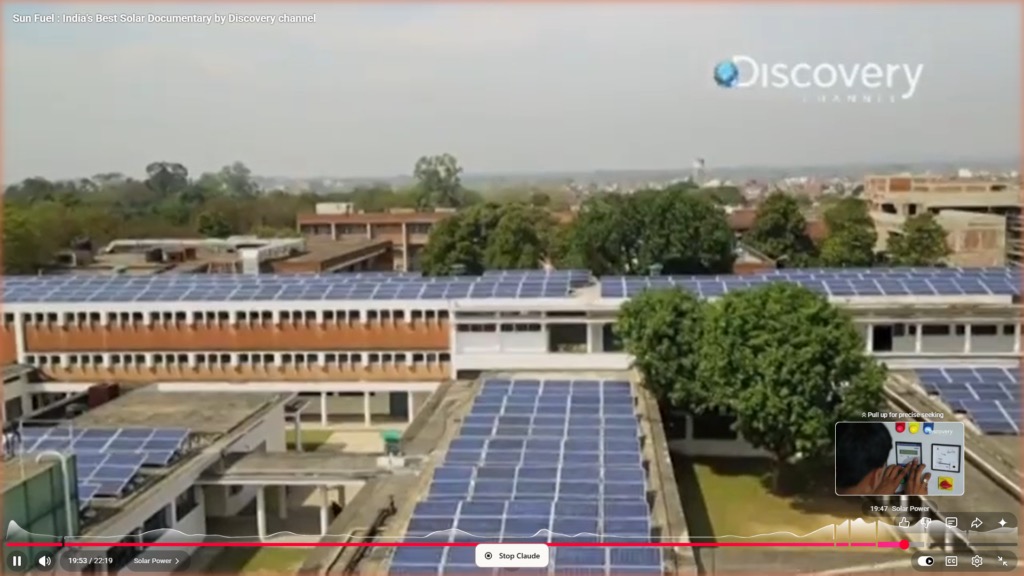
Third-party write-ups kept pointing back to that broadcast: The Better India named an engineering college in Chandigarh in its Discovery solar piece; PlugInCaroo filed a Sun Fuel write-up; Wikipedia records both the PEC 1 MW install and the Discovery national attention. Full media list below.
Sun Fuel on YouTube · also on KunwerSachdev.com news
Why it still matters
Grid-tied rooftop is now the backbone of India’s solar buildout. Projects like PEC helped prove the commercial logic when few believed it. That roof also became the proving ground for what I later shrunk into a home product — India’s first patented grid-feed hybrid inverter line — told on KunwerSachdev.com. Same city later got our Live Solar Experience Centre — channel education where the Solar City push was real.
What I want on record
Kunwer Sachdev — CEO & MD of Su-Kam. PEC Chandigarh: SECI grid-tied rooftop, 1 MW as written in contemporaneous media, ten-year O&M, CREST Solar City frame, tender Jan 2014, commissioned 2015. Full hard-lessons essay: When No One Wanted Solar. Evidence: IT Voice / Energetica / FB archive clipping / Discovery Sun Fuel.
Media links
- IT Voice (24 Jan 2014) — Su-Kam bags 1 MW solar plant for PEC Chandigarh
- Energetica India (27 Jan 2014) — 1 MW solar power project for Su-Kam in Punjab (CREST Solar City; Ashish Sethi quote)
- Energetica India (26 Nov 2015) — IFFCO Chandigarh note naming PEC as largest solar plant at an educational institute
- EQ Mag Pro — syndicated Su-Kam IFFCO Chandigarh / PEC educational-institute line
- Business Standard / ANI (8 Dec 2015) — Su-Kam aims to transform million lives through solar
- pv magazine India (5 Mar 2018) — Kunwer Sachdev interview listing 1 MW at PEC Chandigarh
- Forbes India — Why Su-Kam is looking up to the sun (boardroom / solar pivot)
- The Better India (8 Feb 2016) — Discovery Channel solar video; engineering college in Chandigarh named
- PlugInCaroo (13 Dec 2017) — Sun Fuel: India’s best solar story (Discovery Channel write-up)
- Discovery Channel — Sun Fuel (YouTube upload used on this page)
- Discovery Channel — Sun Fuel: Powering India (YouTube; Wikipedia-cited upload)
- CSE Photo Library — Su-Kam inverters of solar rooftop plant on PEC University (Jan 2016)
- Wikipedia — Su-Kam Power Systems (cites PEC 1 MW install; Sun Fuel national attention)
- Facebook Archive — Su-Kam Community tender post + Chandigarh Hindi clipping (21 Jan 2014)
- SolarManOfIndia — Verification card (PEC 1 MW institutional rooftop)
Essay & site backlinks
- KunwerSachdev.com — When No One Wanted Solar (full PEC / SECI essay) ← primary
- KunwerSachdev.com — Solar installation projects (PEC chapter)
- KunwerSachdev.com — Grid-feed hybrid inverter (PEC as proving ground)
- KunwerSachdev.com — Sun Fuel / Discovery Channel documentary
- KunwerSachdev.com — How Kunwer Sachdev made solar affordable (PEC in the record)
- SolarManOfIndia — Going solar (story chapter)
- SolarManOfIndia — Live Solar Experience Centre Chandigarh
- SolarManOfIndia — Verification
- SolarManOfIndia — Timeline
FAQ
What capacity does media cite for PEC Chandigarh?
Contemporaneous trade and archive press cite 1 MW — IT Voice and Energetica India (Jan 2014); Chandigarh Hindi clipping in the Su-Kam Community Facebook post; Wikipedia and later pv magazine also list 1 MW at PEC. This page follows those media figures only.
Who won and executed it?
Su-Kam Power Systems under Kunwer Sachdev as Founder & Managing Director / CEO & MD — SECI tender to design, install, commission and maintain a grid-tied rooftop plant at Punjab Engineering College, Chandigarh, for ten years.
When was it awarded and commissioned?
Tender win reported late January 2014 (work to commence February 2014). The longer founder essay on KunwerSachdev.com records commissioning by October 2015, with campus-load and savings framing.
Why was it hard?
Founder account (full essay on KunwerSachdev.com): in 2013–14 almost no one wanted solar — expensive modules, thin subsidies, thin net metering, banks without performance history, hosts afraid of roof risk. Winning the tender was the easy part; executing when the market did not exist yet was the hard part.
Where is the full essay?
Read “When No One Wanted Solar” on KunwerSachdev.com — the primary long-form founder record. This SolarManOfIndia page is the archive spine with press, images, Discovery embed, and backlinks to that essay and related KS chapters.
Related
- Full essay — When No One Wanted Solar
- Live Solar Experience Centre — Chandigarh
- NHPC Faridabad 70 kWp
- Facebook Archive — PEC tender
- Verification
Historical Documentation Notice:
This article documents historical innovations and installations under the leadership of Kunwer Sachdev during his tenure as Founder & Managing Director of Su-Kam Power Systems Ltd. (1988–2018). Kunwer Sachdev exited the company in 2019 under the IBC process and holds no association, affiliation, or liability with Su-Kam Power Systems Ltd. or its subsequent management. Capacity figures on this page follow contemporaneous media citations.