The first inverter, and the fire
A technician’s insult, the exploding MOSFETs, the R&D I built from nothing — and the Government of India’s stamp on it.
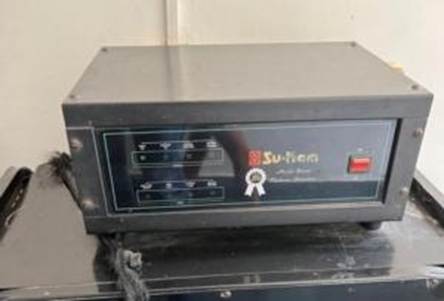
In 1998 an inverter in my own home kept failing. The day the technician came to fix it, I asked how it worked — and he looked at me and said I wouldn’t understand the technology. It hit my ego like a slap. I carried that inverter to my factory, opened it, and found a jungle of loose wires on a cheap single-sided board — cruder than the satellite-receiver PCBs I was already building. I understood two things at once: the whole country was suffering power cuts, and nobody had truly engineered the thing meant to solve it.
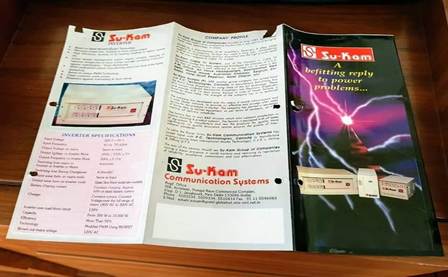
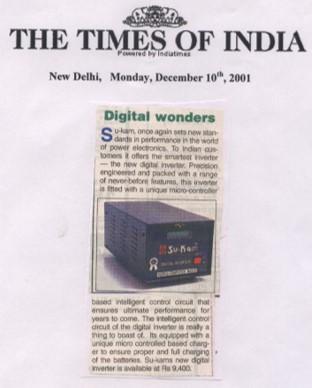
I refused to copy the Kolkata transistor designs everyone else was cloning. I found an inverter built for Western recreational vehicles — double-sided PCB, MOSFET technology, a single battery — and set out to build that for Indian homes. It nearly broke me. For almost two years it was hit and trial: two prototypes, one at the factory and one in my house, rebuilt almost every day. The MOSFETs kept exploding on the bench with a noise that frightened everyone around me. But each failure taught us something — and the first real breakthrough was protection, so a fridge or a washing machine couldn’t kill it. After that, there was no looking back.
“The technician told me I wouldn’t understand the technology. I took the box home, opened it, and built a company out of my wounded pride.”
I gave it a single battery when everyone else needed two, made it half the size, and fought over its colour — painting the chassis black when people warned me black was inauspicious; the market made it the industry norm. I sold the first 500 inverters myself — telecallers working the Yellow Pages, my cable-TV dealers, my own friends — opening the case in front of every customer to show the protections inside. When those 500 ran flawlessly for six months, I knew. In 2000, against everyone’s advice, I shut the cable-TV business completely and bet my whole life on the inverter.
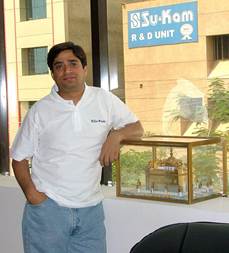
And then I built the thing I am proudest of — not a product, but a place: my R&D. No one would hand me trained engineers, because in this industry they simply did not exist. So I took raw graduates from ordinary colleges and made inventors of them myself, with one promise that terrified and freed them in equal measure — experiment, fail, and I will still protect your job. In a country frightened of failure, I made failure safe, and invention came rushing in. I would set two teams racing at the same impossible problem just to see how far I could push them — and out of that fire came India’s first DSP sine-wave inverter, conceived in my lab, under my obsession, born of my refusal to accept that India couldn’t do it. Some of the young men I trained in that room — Sanjeev Saini, Jagdeep Chauhan — went on to their own patents and companies, and nothing makes me prouder. But the lab was mine. The dare was mine. The stubbornness that would not let us fail was mine.
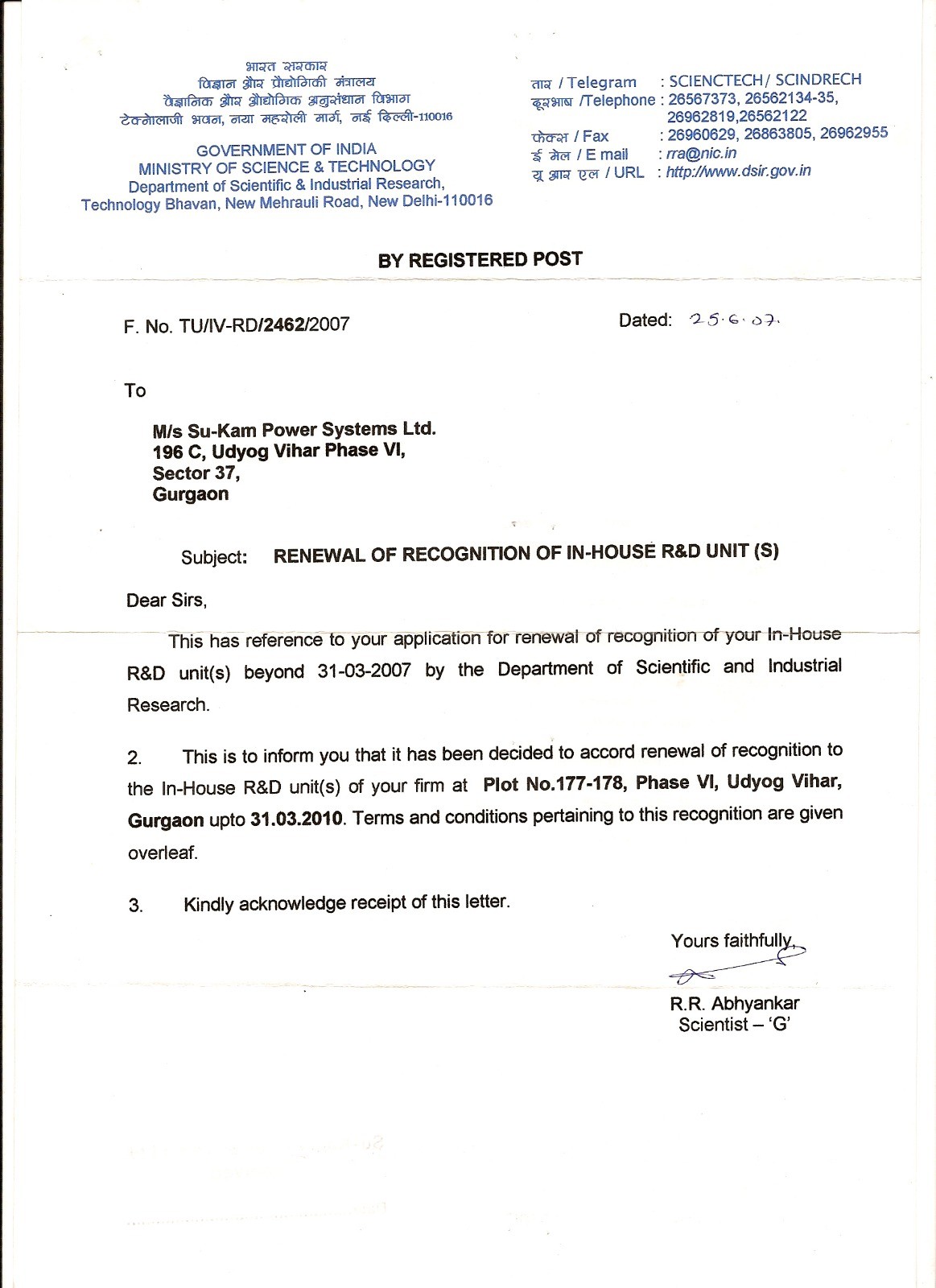
And in 2002 came the stamp I am proudest of. When I built Su-Kam’s R&D, almost nobody in our industry had such a thing — power backup and solar were trades of assemblers and copycats, not laboratories. I was the first to build a real one. Su-Kam became the first company in India’s power-backup and solar industry to have its in-house R&D unit formally recognised by the Department of Scientific and Industrial Research (DSIR), under the Ministry of Science and Technology, Government of India. They do not grant that lightly — they examine your infrastructure, your engineers, your real contribution to indigenous technology, and decide whether your lab belongs beside the nation’s premier research institutions. Ours did. For a self-taught man who’d been told he wouldn’t understand the technology, this was the ultimate validation — and the Government of India’s own letter, below, is the proof.
The first time I learned how fragile it all was came in 2002. I hadn’t even realised how strong our brand had become until the day the Excise department raided us — tipped off, we later understood, by a competitor. They seized our goods, froze the business overnight, and spread the rumour that Su-Kam had shut down. Half my trained workforce was poached; my CFO simply stopped coming. Standing with the few who stayed, I made a decision that sounds reckless and was actually a masterstroke: on 15 August 2002 I dropped our prices 50% and promised dealers we’d compensate their old stock. It detonated in the market. Within weeks we had three months of orders in advance, the cash to restart production, and competitors who couldn’t follow us down. The crisis meant to finish us, made us.
“Every time a crisis came for me, I rose higher. I’ve come to believe the crisis is the opportunity — you just have to be willing to fight your way out.”