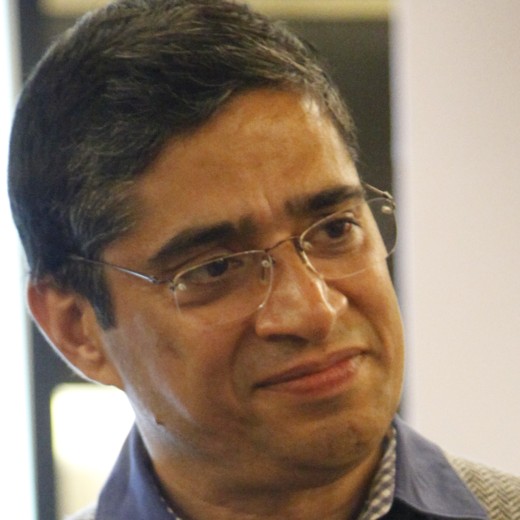
Eighteen Assam Rifles Outposts. 1.3 MW. I Visited Six Myself.
Not one plant — eighteen Assam Rifles sites across five states. A prestigious REIL mandate. I walked six of them myself.
By Kunwer Sachdev · CEO & Managing Director, Su-Kam (at the time) · Founder 1988–2018 · Published August 16, 2026 · Updated September 27, 2026 · Historical era: ~2013–2014


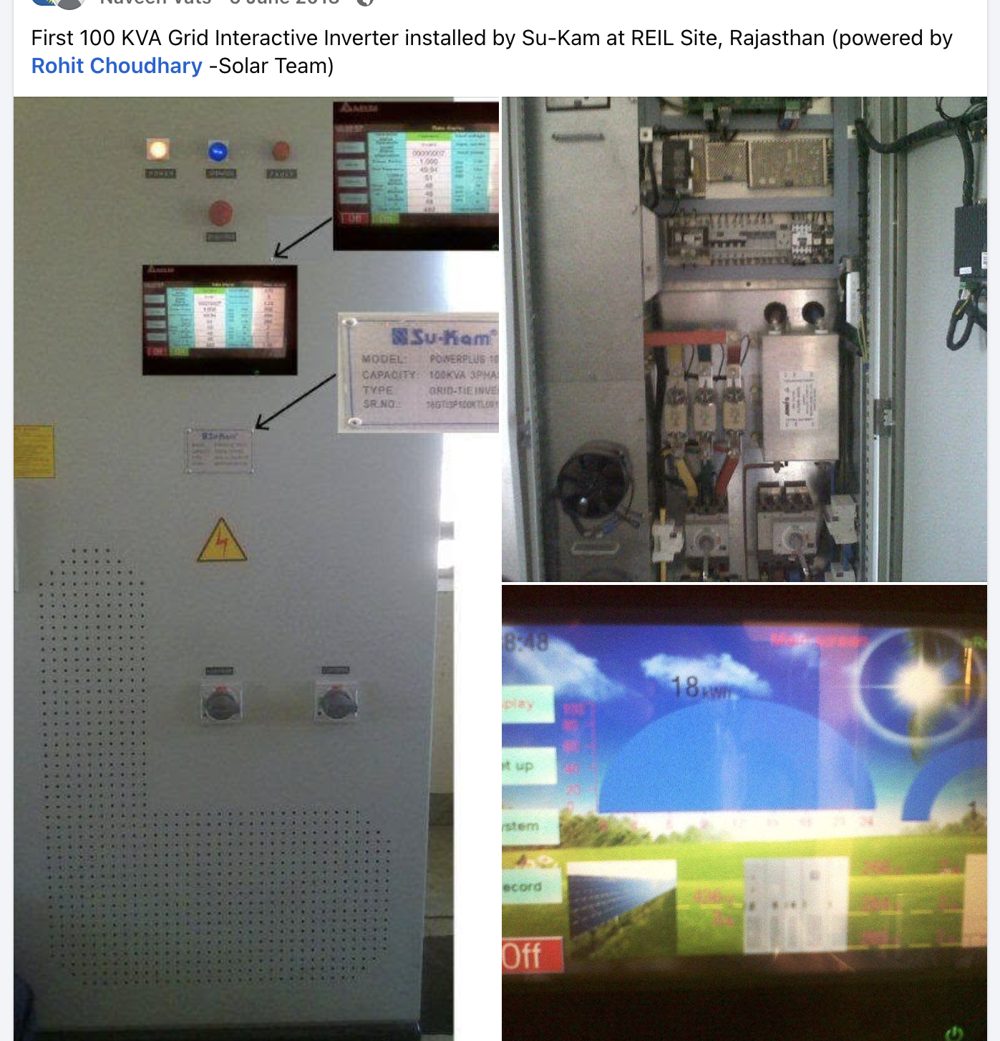
Longer founder essay on KunwerSachdev.com: How Su-Kam Replaced Diesel at Eighteen Assam Rifles Outposts · Colossal 3P 100 KVA Solar PCU (REIL / forces product context). This page is the archive + press spine under my name as CEO & MD.
What We Actually Built
People still talk about “the Assam Rifles solar plant” as if it were one array on one hill. It was not. Under my leadership as CEO & MD, Su-Kam solarised eighteen Assam Rifles sites across five states — Manipur, Nagaland, Mizoram, Tripura, and Assam — about 1.3 MW of off-grid solar with battery storage. Ten sites at 50 kWp. Eight at 100 kWp. Moreh, on the Myanmar border, is one of those 100 kW headquarters. Facebook captured Moreh. The programme was the network.
The Assam Rifles is India’s oldest paramilitary force, raised in 1835. It guards the Indo-Myanmar frontier. For decades the answer to power at a remote battalion was a diesel generator, drums of fuel, and a road the monsoon could close for weeks. Through Rajasthan Electronics & Instruments Limited (REIL) — the Government of India enterprise that consolidated renewable procurement for central forces — we put solar and storage on those posts under JNNSM / MNRE subsidy. Design, supply, install, commission, maintain. Including a 48-hour service SLA on sites that, in some cases, could only be reached by helicopter.
I Visited Six Sites Myself
This was a prestigious project — Assam Rifles, REIL, border geography, national solar mission money. I did not treat it as a brochure win from Gurugram. As CEO & MD I personally visited six of the eighteen sites. I needed to see the arrays on broken slopes, the battery sheds, the jawans who would top the cells, and whether remote monitoring was a real screen in a real room or a slide in a tender deck.
Before solar, some posts rationed electricity when drums ran low: lights off unless strictly needed, radio room first, computers metered. The day I walked a freshly commissioned site, the men were dealing with something they had not had to manage before — reliable round-the-clock power. Disbelief first. Then a fan in the afternoon without a sergeant calculating diesel in his head. That is why I went. Prestige work either survives the ground or it is marketing.

Why Off-Grid Was the Only Architecture
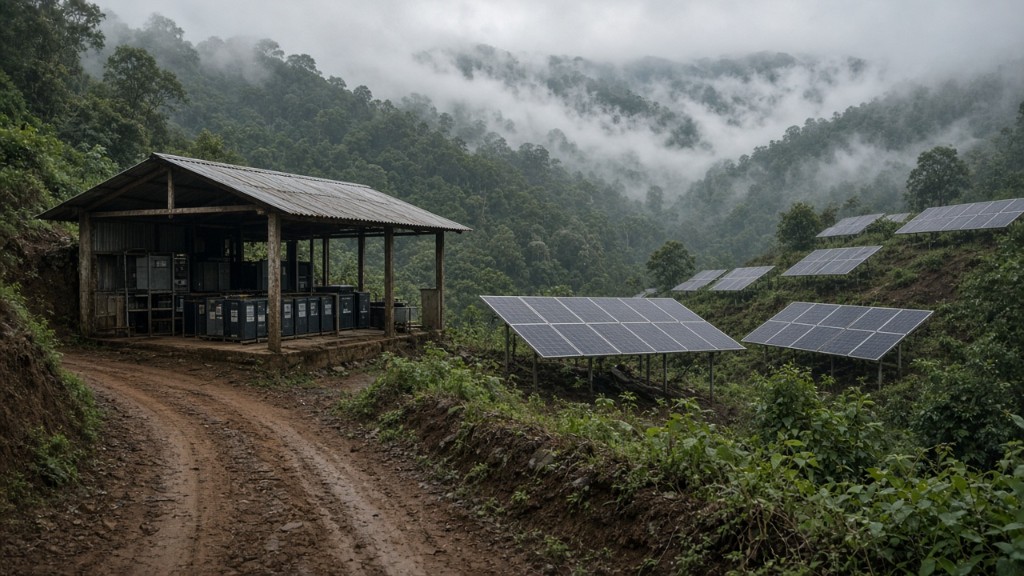
The North-East border is not terrain for a grid extension. Mountains, heavy rain, seasonal roads — and in many battalion postings the conventional grid is not a meaningful presence. What exists is a genset, a fuel drum, and a supply chain that fails when the road fails. Off-grid solar on roofs and ground frames charges tubular 2V battery banks through the day. Diesel stays on standby for long overcast spells. Runtime — and fuel demand — drops. Weekly diesel runs become monthly or less.
Before:
Mountain fuel convoy → remote base → continuous DG sets (cost, noise, blackouts)
After (Su-Kam):
Dispersed terrain arrays → heavy-duty Solar PCU → 2V high-capacity battery bank → 24/7 silent power; diesel on standby
Remember the timing. This was before the Modi government’s later national solar focus dominated Indian headlines. We were already pushing hard solar — state programmes at home, defence and institutional work in the hardest terrain — developing electronics and batteries ourselves when those were still largely not an import free-for-all. Panels were the main import. The stack that powered Assam Rifles was engineered in India under my watch.

Terrain, Logistics, and Soldiers Who Ran the Plants
Every site was different. Shadow from ridges and forest that would kill a lazy rooftop layout. Fragmented ground where a single 100 kW field was impossible, so we broke plants into modular sub-arrays across slopes and roofs and clubbed DC into a central PCU. Material logistics were worse than the drawings: battery crates through REIL’s channel arrived unmarked and cross-shipped between Manipur, Nagaland, Mizoram — our engineers re-sorted hundreds of heavy 2V cells on border roads and got them to the right hilltops.
Local solar manpower did not exist at those posts. We trained our own task force in Gurugram, then trained Assam Rifles soldiers on water topping, specific gravity, equalisation, and plant O&M. The September 2014 Facebook post is not a classroom vanity photo — it is the O&M model for a network of battalion and HQ plants. Across all eighteen sites we put remote monitoring — generation, state of charge, load, alarms — close to real time. That was the only honest way to honour a 48-hour SLA on that geography.


REIL was a late paymaster. We carried working capital while defence timelines stayed on the wall. Trade press of June 2014 said diesel dependence at these sites fell by about half. The diesel did not vanish. The battalion was no longer at the mercy of a closed road.
Ground Reality — Specs
| Parameter | Detail |
|---|---|
| Programme | Assam Rifles border solarisation — 18 off-grid sites |
| States | Manipur, Nagaland, Mizoram, Tripura, Assam |
| Capacity | 1.3 MW — 10×50 kWp + 8×100 kWp |
| Documented 100 kW HQ | Moreh, 26th Sector H.Q. (Facebook, 26 July 2014) — one of eight |
| Channel | Su-Kam through REIL; JNNSM / MNRE subsidy |
| Architecture | Off-grid PV + tubular 2V battery; diesel standby |
| Service SLA | 48-hour response, including helicopter-only sites |
| Founder site visits | Kunwer Sachdev (CEO & MD) visited 6 of 18 sites |
Verified Sources
- How Su-Kam Replaced Diesel at Eighteen Assam Rifles Outposts — KunwerSachdev.com
- Colossal 3P 100 KVA Solar PCU — KunwerSachdev.com (REIL / forces context)
- VARIndia — Assam Rifles uses Solar power to light up remote locations
- Electronics Maker (12 June 2014) — Assam Rifles switches to solar
- pv magazine India (5 March 2018) — Kunwer Sachdev interview, 1.3 MW Assam Rifles
- Facebook Archive — Moreh 100 kW + training + REIL 100 KVA
- Chapter 5: Going Solar — India's First 1 MW Grid-Feed Plant
- Eight Pillars of Legacy — Defense & Public Infrastructure
- REIL — Rajasthan Electronics & Instruments Limited
- Su-Kam Solar Projects: 10 Stories From the Field — KunwerSachdev.com
- Solar Installation Projects — KunwerSachdev.com
Related
- 40,000 Rural Homes — Direct-DC (Landmark Episode 1)
- Tamil Nadu Green House — 10,000 homes
- Afghanistan solar telecom — 17 provinces
- Facebook Archive — Moreh, training, REIL
- Chapter 5: Going Solar
- Eight Pillars — Defense & Public Infrastructure
FAQ
How many Assam Rifles sites did Su-Kam solarise?
Eighteen sites across five North-East states — Manipur, Nagaland, Mizoram, Tripura, and Assam — not one plant. Total capacity about 1.3 MW: ten sites at 50 kWp and eight at 100 kWp (VARIndia; Electronics Maker, June 2014; pv magazine India interview, 2018).
Did Kunwer Sachdev visit the Assam Rifles sites?
Yes. As CEO & MD he personally visited six of the eighteen sites. It was a prestigious REIL / Assam Rifles mandate, and he would not sign off prestige work from a desk in Gurugram alone.
Was Moreh the whole Assam Rifles solar project?
No. Moreh (26th Sector H.Q., Myanmar border) is one of the eight 100 kWp headquarters plants — the site Su-Kam posted on Facebook on 26 July 2014. The programme was a dispersed network of battalion and HQ plants.
What was REIL’s role?
Rajasthan Electronics & Instruments Limited (REIL), a Government of India enterprise, front-ended renewable procurement for central forces. Su-Kam designed, supplied, installed, commissioned, and maintained the Assam Rifles off-grid systems under that channel, with JNNSM / MNRE subsidy support and a 48-hour service SLA.
Historical Documentation Notice:
This article documents historical innovations and installations executed under the leadership of Kunwer Sachdev during his tenure as Founder & Managing Director of Su-Kam Power Systems Ltd. (1988–2018). Kunwer Sachdev exited the company in 2019 under the IBC process and holds no association, affiliation, or liability with Su-Kam Power Systems Ltd. or its subsequent management.