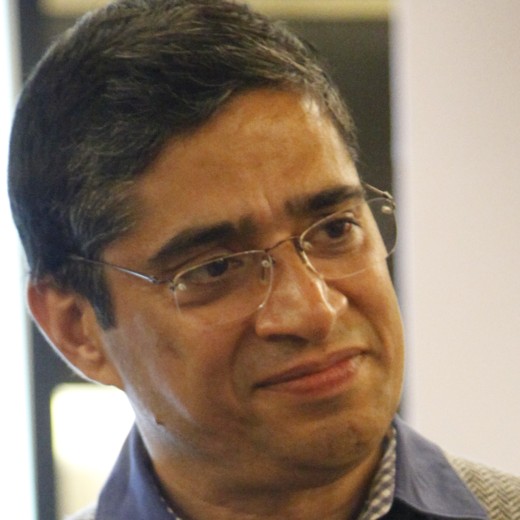
Bolivia Came Looking for Lithium. They Walked Into a Solar Factory in Gurugram.
Lithium. Batteries. Power cuts. Joint ventures. Solar. I was in the room.
By Kunwer Sachdev · Founder & Managing Director, 1988–2018 · Published September 24, 2026 · Historical era: March 2018
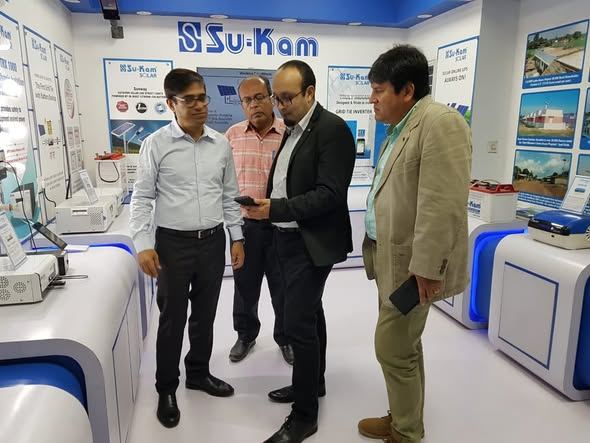
Primary sources: Facebook Archive — Bolivia Ambassador visit · Saur Energy, 16 March 2018 · YourChennai, 17 March 2018
Diplomacy Does Not Usually Walk Into a Factory
Diplomacy does not usually walk into a power-electronics factory in Gurugram. On that day, it did.
H.E. Mr. Sergio Dario Arispe Barrientos, Bolivia’s Ambassador to India, came to Su-Kam with Councillor Juan Jose of the Embassy. The visit was part of a larger mission: find Indian companies that could sit on the lithium–battery side of the energy story, and see whether trade and technology ties with India could go deeper. Saur Energy covered it on 16 March 2018. YourChennai carried the same thread the next day. Our Facebook page recorded it as an official diplomatic visit — photos with leadership, the R&D wing, the factory floor.
I was there personally. That matters to me, because this was not a courtesy handshake in a boardroom corridor. It was a real working meeting about the future of energy storage, power cuts, joint ventures, and solar — and I sat through every turn of it.
Why Bolivia Came Looking for Lithium Partners
Bolivia was — and still is — spoken of as holding a huge share of the world’s lithium, much of it still untapped in the Andes. The Ambassador’s brief was clear: explore Indian companies that might move into lithium-ion battery manufacturing, and see how that could strengthen Bolivia–India trade.
At Su-Kam we were not a lithium miner. We were a company that lived every day with batteries, inverters, solar PCUs, and the Indian reality of unreliable grid power. So when they asked whether we were getting into the lithium battery space, the question was not abstract. It sat right on top of what we already did: storage, power electronics, and systems that have to work when the grid does not.
They also came with a hard fact about their own country: a large part of Bolivia’s population still lacked reliable grid electricity. Lithium plus technology was not only a trade story. It was a development story. In that frame, solar was not a side topic. It was the other half of the same conversation.
The Meeting Started Official
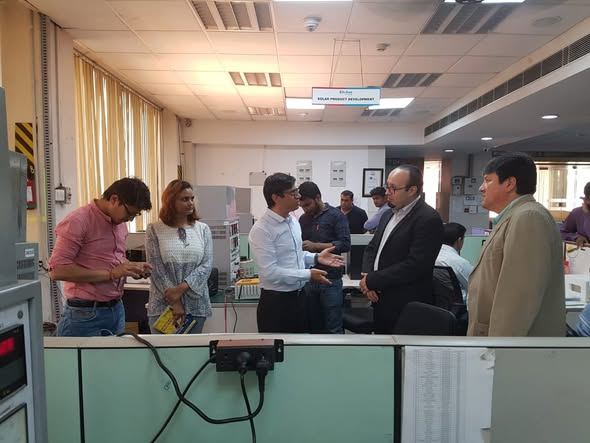
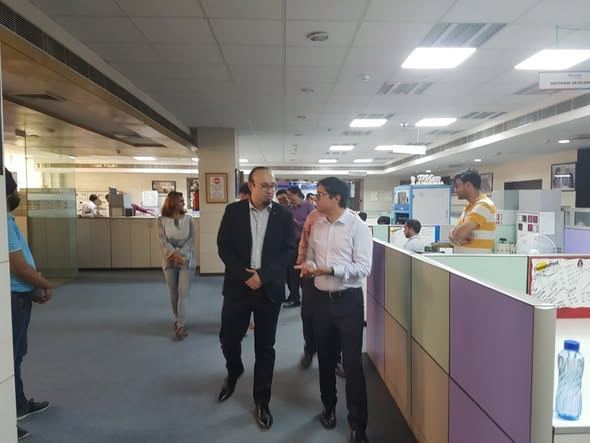
It began as a very official meeting should. Protocol. Introductions. The Ambassador and the Councillor. Our side. The language of bilateral trade, training, export, customisation. They toured the R&D wing and the Gurugram factory. They looked at how we built products — not slides alone, but the actual work of an Indian company that had spent decades in power backup and solar.
The agenda, as the press later summarised it — and as I lived it in the room — covered several tracks at once:
- Lithium and batteries — whether Su-Kam was entering, or could enter, the lithium-ion space, given Bolivia’s reserves and India’s manufacturing and electronics strength
- Power deficit and power cuts — how technology from a company that had grown up solving India’s outages might help bridge gaps elsewhere
- Joint venture and partnership talk — training Bolivian manpower in solar and power electronics; possible export of Su-Kam products customised for Bolivia; longer-term association
- Solar — not as a brochure line, but as a real area of discussion, because storage without generation is only half a system
Lithium on the Bench. Solar on the Wall.
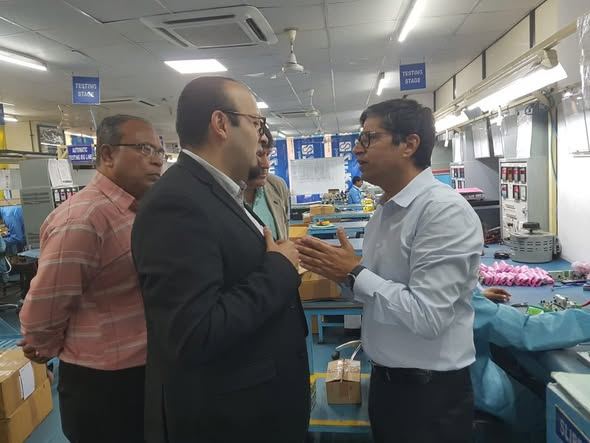
I spoke then as Managing Director. The line that went into the papers was true to what I believed in that room: Bolivia had lithium; India had technology and know-how; together there was a path to train people, bridge power deficits, and build something mutually useful over time.
From the contemporaneous press (Saur Energy / YourChennai):
“We are honoured to host Ambassador of Bolivia. Since Bolivia has large untapped reserves of lithium and India has advanced technology, our country can play an instrumental role in imparting the technical know-how to Bolivia’s population and bridging the power deficit in the country. We look forward to a mutually beneficial association in the long run.”
— Kunwer Sachdev, Managing Director, Su-Kam
The Ambassador’s own words in the coverage were equally forward-looking — young countries, future trade, selling and buying in each other’s markets, and diplomacy following economics.
Then the Room Loosened
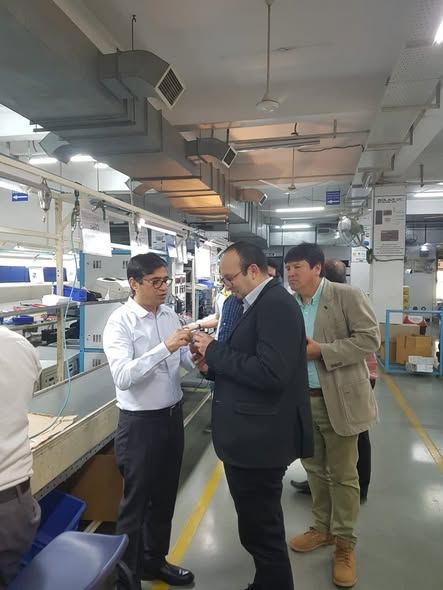
What the cameras and the press release cannot show is how the temperature of a room changes.
It started formal — flags of conversation, careful phrasing, the weight of an embassy visit. After the first round of agenda points, after we had walked the floor and sat down again, the meeting loosened. Diplomacy did not disappear, but the stiffness did. Questions became more direct. Lithium: were we serious about batteries at that scale? Power cuts: how did we design for a country like India, and could that mindset travel? Joint ventures: what would a real JV look like — training, local assembly, export, something more? Solar: which products, which models, what customisation would Bolivia need?
That is when a visit stops being a photo opportunity and becomes a conversation between people who are trying to see if two countries’ problems and strengths actually fit. I was in that informal stretch of the meeting. I remember it as more useful than the opening formalities — because that is where intent shows.
What I Want on Record
For Su-Kam, hosting Bolivia’s Ambassador was not a random PR day. It was evidence that the work we had done in solar and power electronics had become visible enough that a resource-rich country halfway across the world would walk into Gurugram to ask about lithium, batteries, training, and solar in the same sitting.
For me personally, it sits in a simple place in memory: I was there. It was official. It became human. We talked about lithium because the world was waking up to storage. We talked about power cuts because that is the problem I had spent my life solving in India. We talked about joint ventures because ambition without a vehicle is only a speech. And we talked about solar because sunlight does not need a visa.
Whether every thread of that conversation later became a signed deal is a different chapter. The chapter I want on record here is the meeting itself — the Facebook archive that proves the visit happened, the March 2018 press that named the people and the themes, and my own account of sitting in the room when Bolivia came looking for lithium and found, also, a solar company ready to talk about power, partnership, and the long road of working together.
Verified Sources
- Saur Energy (16 Mar 2018) — Bolivian Ambassador Barrientos Lauds Su-Kam’s Superior Technology
- YourChennai (17 Mar 2018) — Bolivia Ambassador lauds Su-Kam technologies
- Facebook Archive — Bolivia Ambassador visit
- EQ Mag — Bolivia offers to partner, share lithium resources
- Solar blogs — solarmanofindia.com
FAQ
Who visited Su-Kam from Bolivia in 2018?
Bolivia’s Ambassador to India, H.E. Mr. Sergio Dario Arispe Barrientos, visited Su-Kam’s Gurugram headquarters with Embassy Councillor Juan Jose in March 2018.
Why did Bolivia’s Ambassador visit Su-Kam?
The visit explored lithium-ion battery manufacturing potential, bilateral trade, training, joint ventures, power-deficit solutions, and solar technology — Bolivia holding large lithium reserves and seeking Indian technology partners.
Was Kunwer Sachdev present at the meeting?
Yes. Kunwer Sachdev, then Managing Director of Su-Kam, personally hosted the meeting. It began as a formal diplomatic visit and later became a more informal working conversation.
Where can I find contemporary press on the visit?
Saur Energy (16 March 2018) and YourChennai (17 March 2018) covered the Ambassador’s visit and quotes. Photos are preserved in the SolarManOfIndia Facebook Archive.