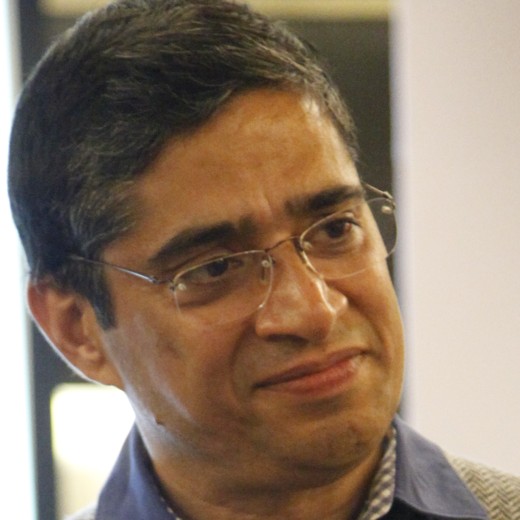
I Walked CET’s Roof With Our Distributor Before We Put 135 kW On It.
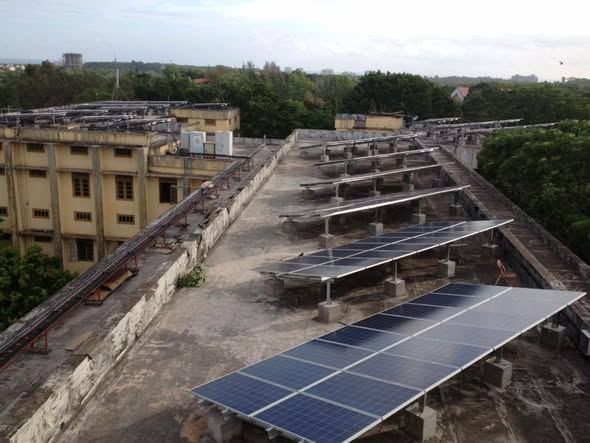
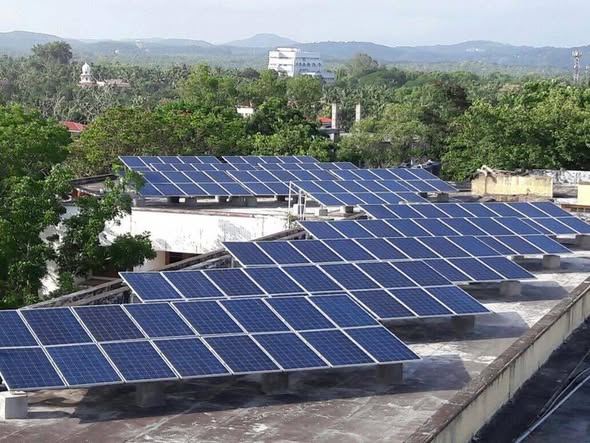
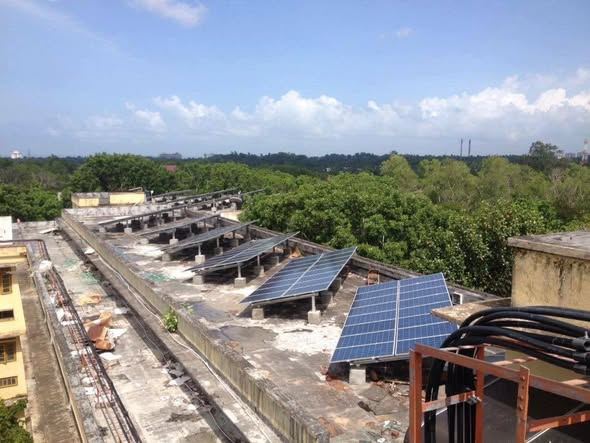
College of Engineering, Thiruvananthapuram — Asia’s oldest engineering colleges, Kerala’s capital. Under my watch as CEO & MD, Su-Kam put one hundred thirty-five kilowatts of grid-tie on that roof.
By Kunwer Sachdev · CEO & Managing Director, Su-Kam (at the time) · Founder 1988–2018 · Published September 28, 2026 · Historical era: Su-Kam blog / FB 2016–17 · #WednesdayWisdom Jan 2018
Media / archive — Su-Kam blog (Wayback) + Facebook Jul 2016 / Mar 2017: 135 kW grid-tie at an engineering college in Thiruvananthapuram; ~675 units/day; inverters 2×50 + 20 + 15 kW. #WednesdayWisdom 17 Jan 2018 names College of Engineering, Thiruvananthapuram. No separate Energetica/NCN leaf found — FB + company blog first.
I Visited With the Distributor Before We Installed
Under my leadership as CEO & MD, Su-Kam did not drop a kit on College of Engineering, Thiruvananthapuram from a spreadsheet in Gurugram. I visited the site before installation with our distributor — walked the campus, saw the roof, heard the load story from the people who would live with the plant. Prestige government engineering colleges do not forgive careless surveys. Kerala’s capital does not forgive absentees either.
That visit is why the order sat right with me. The college wanted to cut heavy monthly grid charges and put a massive campus load on solar. The distributor knew the ground. I needed to see it myself before we committed Su-Kam’s name to one of Asia’s oldest engineering colleges.
What the Su-Kam Media Record Says — 135 kW Grid-Tie
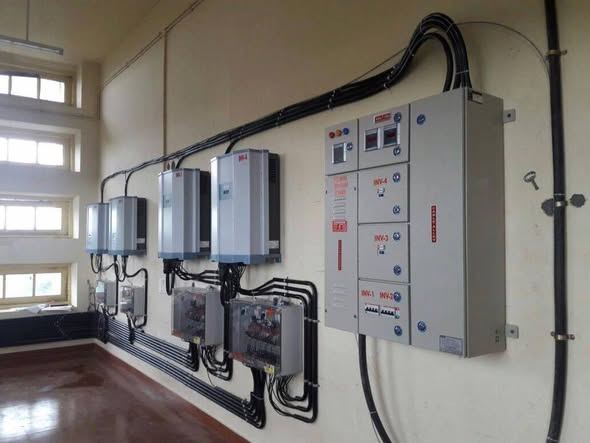
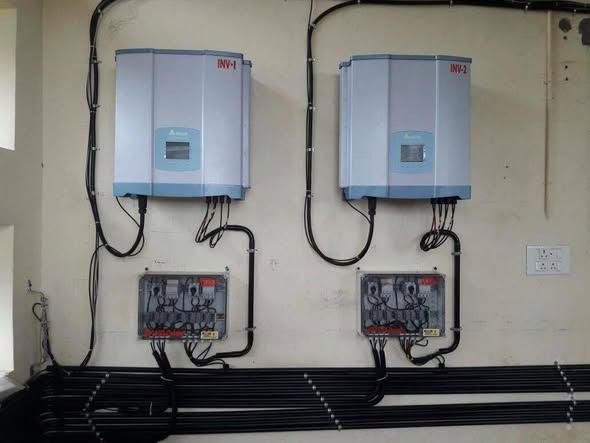
The company blog (still readable on Wayback) and the Facebook story posts are specific. Su-Kam received the order for a 135 kW grid-tie installation. Technical line as published:
- Solar panels — 135 kW (250 W / 24 V class)
- Grid-tie inverters — 135 kW total: 50 kW × 2, 20 kW × 1, 15 kW × 1
- Expected generation about 675 units/day (weather dependent) to run college load and feed excess to the grid
- Campus framed at about 100 acres
- Installation team headed by Mr. Daniel, Deputy Manager, Solar Projects, Su-Kam
Joint management decision at the college: stop burning money on grid for a load that solar could carry. Grid-tie so daytime solar runs the campus and surplus goes back to the utility. That is what we built.
#WednesdayWisdom — Keep Telling the Channel
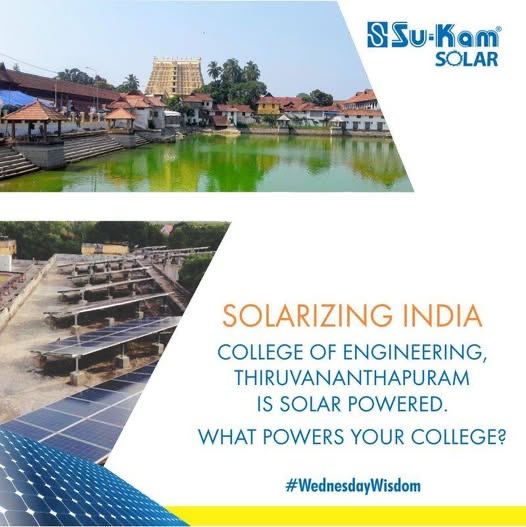
On 17 January 2018 the Su-Kam page put CET into the #WednesdayWisdom series: “College of Engineering, Thiruvananthapuram is Solar powered. What powers your College?” Temple landmark above, rooftop array below — Kerala capital prestige in one frame. Same series language as EIL, SBI Academy, NHPC: solarizing India’s institutions one post at a time. For dealers it was a one-line reference — if CET runs on Su-Kam solar, your next college conversation is shorter.
On the Schools-and-Colleges Map
Under my watch campus solar was not a side project. Gates Gooty was the South foothold; that 100 kW story is elsewhere. PEC was the megawatt educational landmark in Chandigarh; that media record is elsewhere. CET is Kerala’s capital engineering college — 135 kW grid-tie, visited before install with the distributor, executed by Daniel’s team, kept alive in the WednesdayWisdom feed.
What I Want on Record
Kunwer Sachdev — CEO & MD of Su-Kam. College of Engineering, Thiruvananthapuram: 135 kW grid-tie as written in Su-Kam’s blog and Facebook media — ~675 units/day framing, 2×50 + 20 + 15 kW inverters, Mr. Daniel’s install team. Founder: I visited the site with the distributor before installation. Archive: Wayback company blog + FB story photos + Jan 2018 #WednesdayWisdom creative.
Verified Sources
- Wayback — Su-Kam blog: Amazing! This Engineering College in Kerala Runs on 135KW Solar Power…
- Facebook — Su-Kam 10 Mar 2017 / story post (135 kW CET narrative + photos)
- Facebook — #WednesdayWisdom 17 Jan 2018 (College of Engineering, Thiruvananthapuram is Solar powered)
- Facebook Archive — CET / WednesdayWisdom card on this site
- Wikipedia — College of Engineering, Trivandrum (institution context)
- Companion — Gates College Gooty 100 kW
- Companion — PEC Chandigarh 1 MW
- Companion — Live Solar Experience Centre Chandigarh
Related
- Gates College Gooty — 100 kW
- PEC Chandigarh — 1 MW
- Live Solar Experience Centre — Chandigarh
- Facebook Archive — CET #WednesdayWisdom
FAQ
What did Su-Kam install at College of Engineering, Thiruvananthapuram?
A 135 kW grid-tie solar plant. Su-Kam’s company blog (preserved on Wayback) and Facebook posts (Jul 2016 / Mar 2017) specify ~135 kW of 250 W panels, grid-tie inverters totalling 135 kW (2×50 kW, 1×20 kW, 1×15 kW), and about 675 units of generation per day depending on weather — enough to run the college load and export excess to the grid.
Did Kunwer Sachdev visit the site?
Yes. As CEO & MD his founder account is that he visited the College of Engineering, Thiruvananthapuram site with the distributor before installation — to see the roof and the load story firsthand before Su-Kam’s team executed the grid-tie plant.
Who is the college?
College of Engineering, Trivandrum / Thiruvananthapuram (CET) — one of Asia’s oldest and most respected government engineering colleges, in Kerala’s capital. Su-Kam’s #WednesdayWisdom creative paired the Padmanabhaswamy Temple landmark with the rooftop array.
Who ran the installation for Su-Kam?
The Su-Kam blog names Mr. Daniel, Deputy Manager, Solar Projects, as heading the expert installation team for this job.
Is there third-party trade press?
No separate Energetica/NCN leaf naming Su-Kam + CET was found. The contemporaneous media record is Su-Kam’s own blog (Wayback) plus Facebook archive posts and the Jan 2018 #WednesdayWisdom creative. Do not confuse with later CET/KSEB multi-phase capacity work that is a different programme.
How does this sit with other college solar under Kunwer Sachdev?
Same schools-and-colleges map as Gates Gooty (~100 kW) and PEC Chandigarh (1 MW in media) — Kerala capital prestige after South India footholds, under his watch as CEO & MD.
Historical Documentation Notice:
This article documents historical innovations and installations under the leadership of Kunwer Sachdev during his tenure as Founder & Managing Director of Su-Kam Power Systems Ltd. (1988–2018). Kunwer Sachdev exited the company in 2019 under the IBC process and holds no association, affiliation, or liability with Su-Kam Power Systems Ltd. or its subsequent management. Pre-install site visit with the distributor is founder recollection; technical figures follow Su-Kam blog / Facebook media.