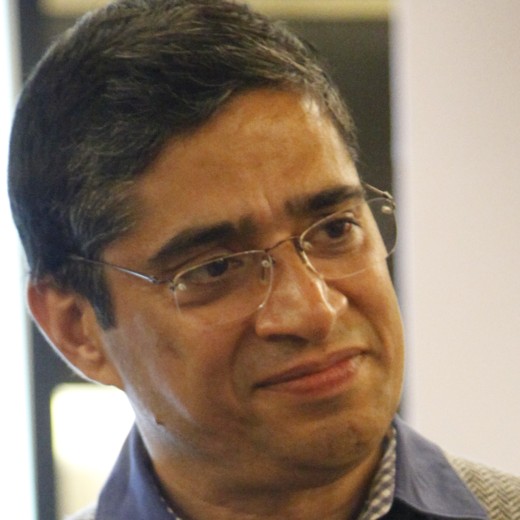
We Built India’s First BEE 4-Star Inverter — Before the Standard.
China led high-frequency. We built one for India, patented it, and put four BEE stars on a home UPS that paid for itself on the bill.
By Kunwer Sachdev · CEO & Managing Director, Su-Kam (at the time) · Founder 1988–2018 · Published September 28, 2026 · Historical era: BEE 4★ Jul 2015 · Falcon HBU press Mar 2016
External media — Energetica (22 Jul 2015): first inverter company with BEE 4-star; quotes Kunwer Sachdev. Launch: Energetica Falcon HBU · ELE Times · Electronics Maker. Source essay: KunwerSachdev.com — Falcon HBU.
The Product Before the Standard
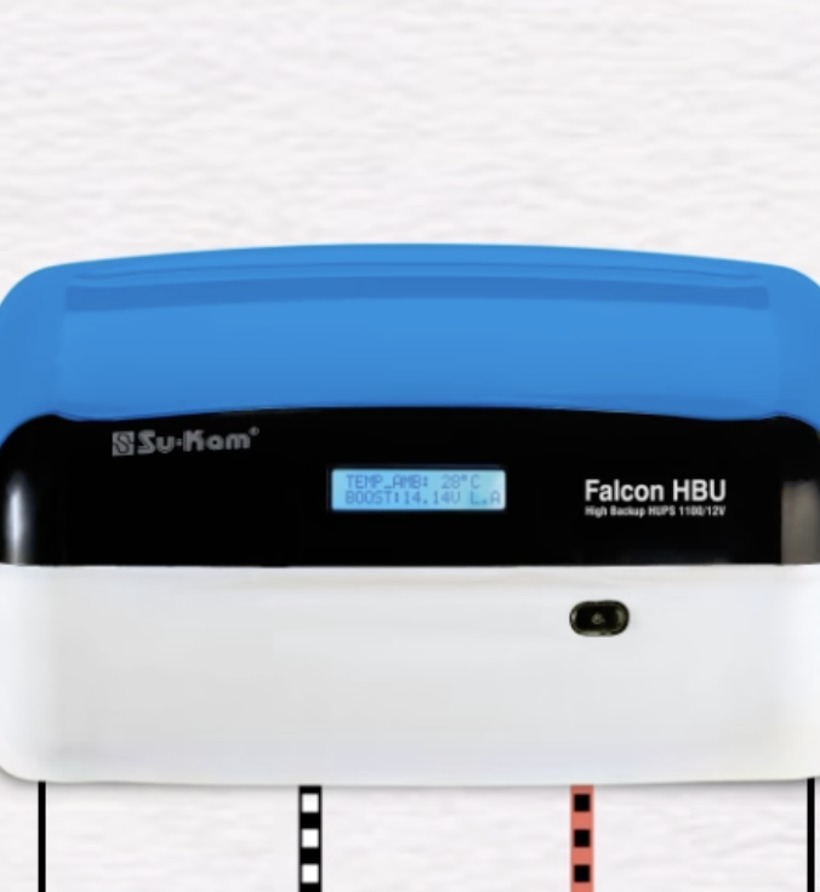
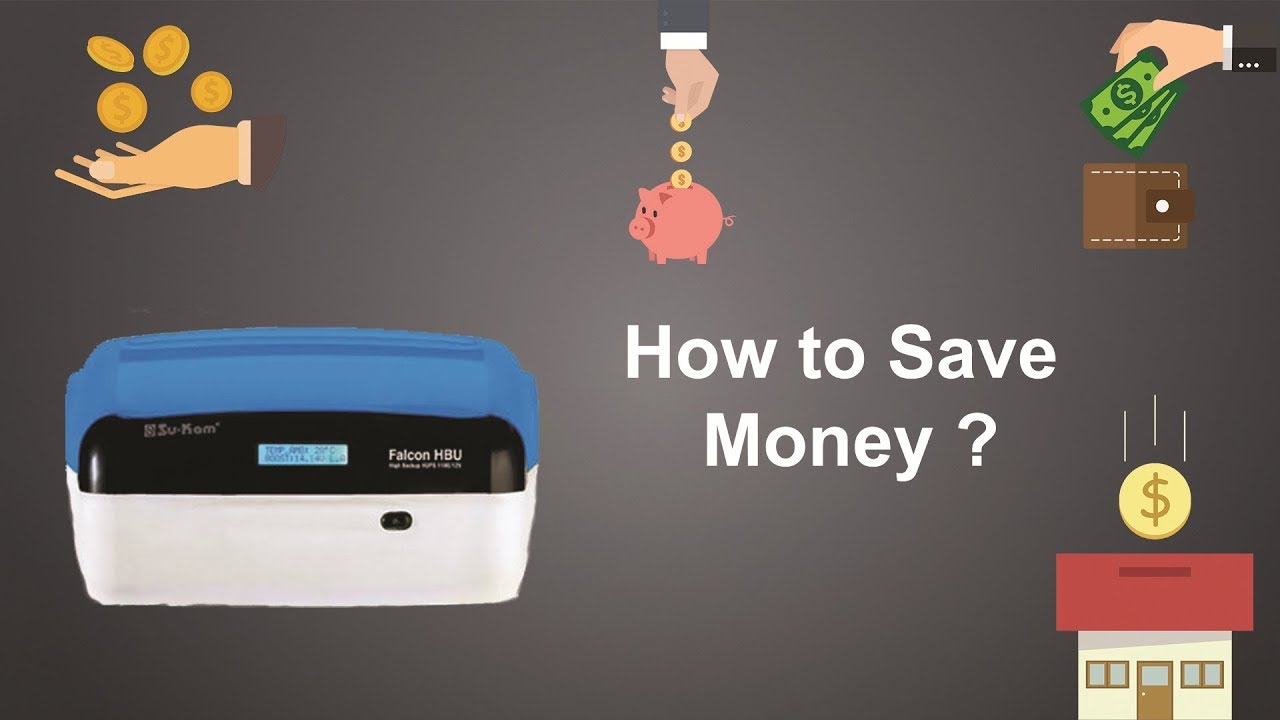
Under my leadership as CEO & MD, Su-Kam built the Falcon HBU — Falcon High Backup UPS — as a high-frequency inverter and a UPS in one box. Trade press put the claim in print: first Indian inverter company with a BEE 4-star rating, framed around ~90% efficiency. I wrote the long product story on KunwerSachdev.com. This page is the Solar Man of India founder record — with the same numbers, the same failures, and the press that verified the launch.
The “U” in HBU mattered: UPS-grade changeover — fast enough, quiet enough, that many homes did not feel the cut. It was also framed as the first of its kind to show backup time left on the display, so a long outage was managed, not guessed.
China Led High-Frequency. We Built One for India.
At the time, China led the world in high-frequency inverter technology. We set out to build one for India — compact transformer, low harmonics, bidirectional technology we filed a patent on. The engineering human story sits with CTO Sivarajan Ramachandran and the wider R&D team. First in India on that HF home-UPS path — not a sticker chase.
The 4 Stars Are Money Back on the Bill
For the first time in the Indian power-backup industry’s framing, a home UPS was efficient enough to earn four BEE stars — and we put the comparison on video against an ordinary inverter (tested on a 150Ah / 12V battery).
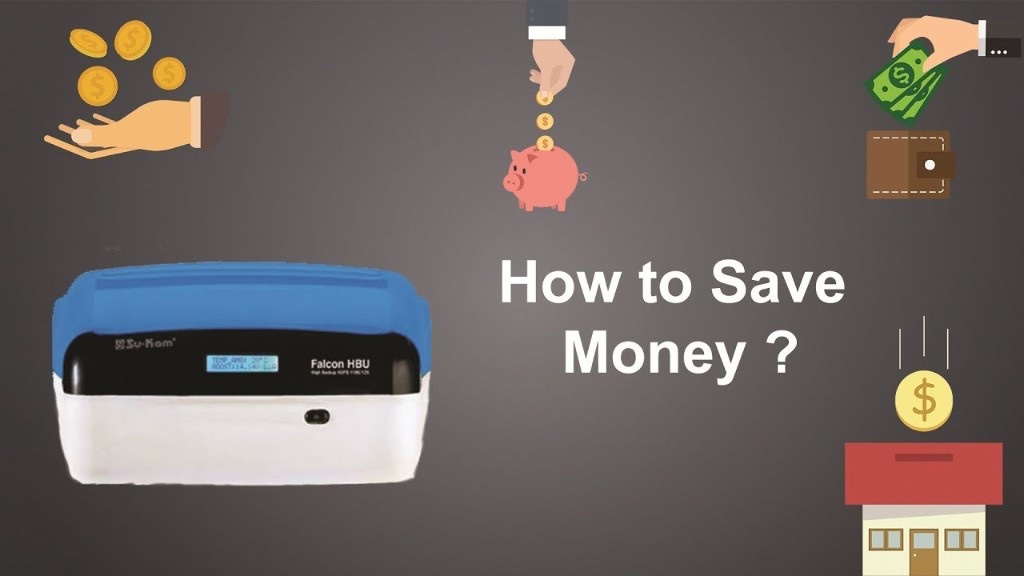
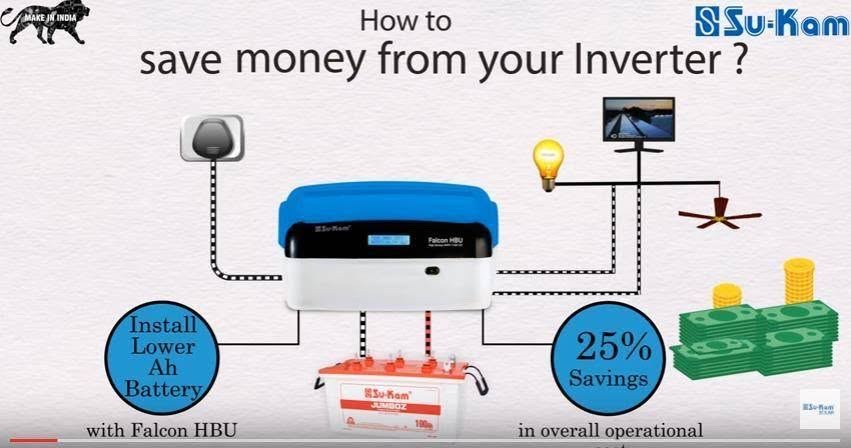
Watch on YouTube — Normal Inverter vs Su-Kam Falcon HBU
| What’s measured | Ordinary inverter | Falcon HBU |
|---|---|---|
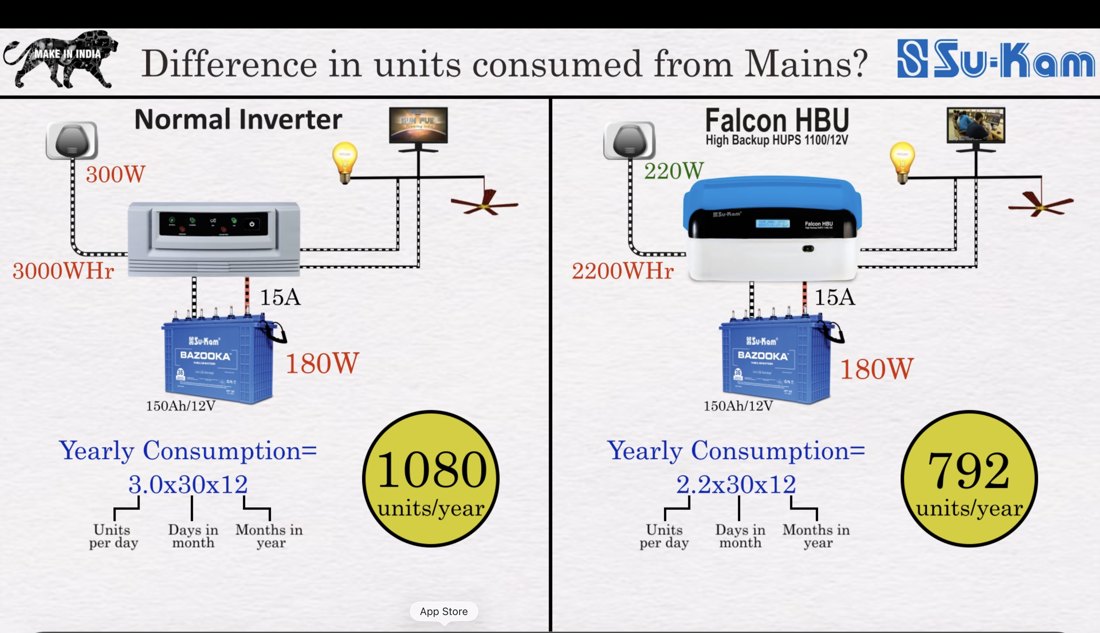
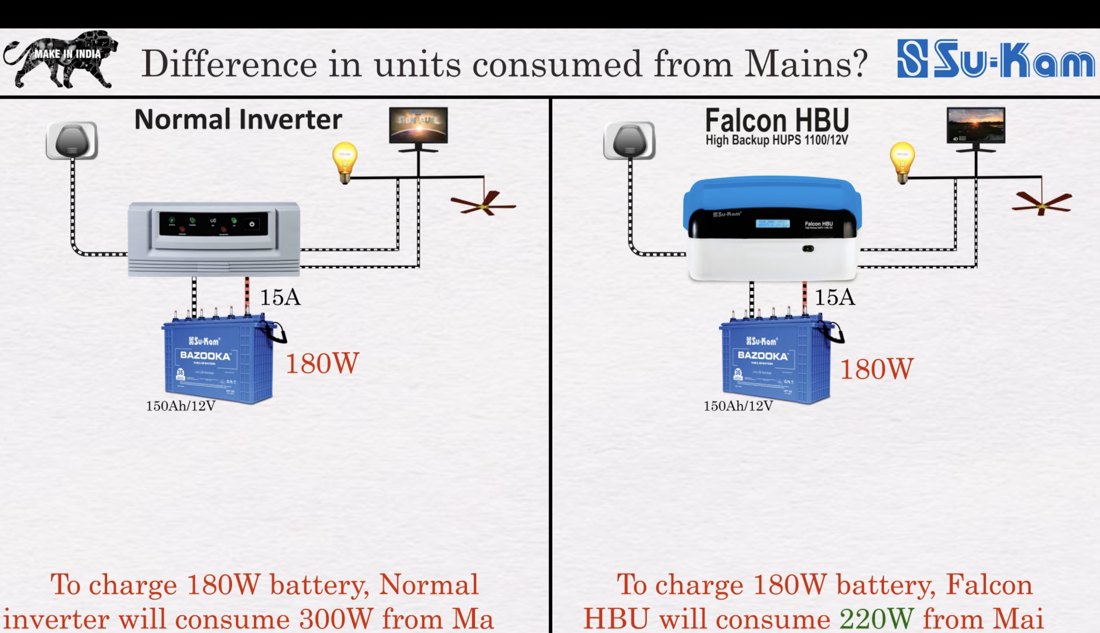
| Grid draw to charge (180 W needed) | ~300 W | ~220 W |
| Daily charging energy (10 hrs) | 3.0 units/day | 2.2 units/day (−0.8) |
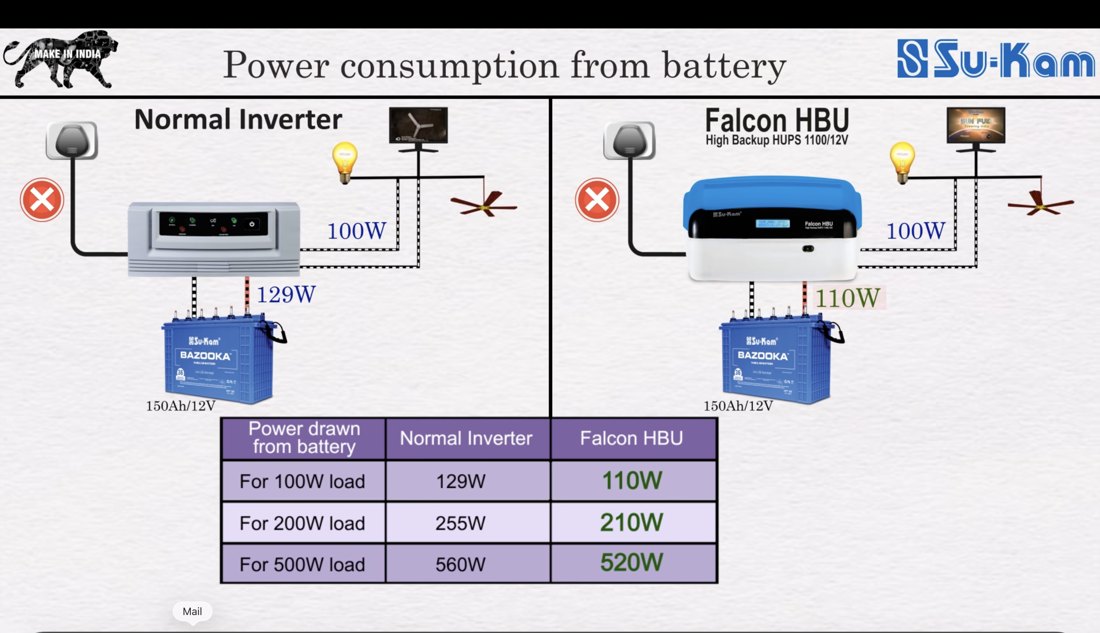
| Battery draw @ 100 W load | 129 W | 110 W |
| Battery draw @ 200 W load | 255 W | 210 W |
| Battery draw @ 500 W load | 560 W | 520 W |
| Backup @ 100 W | 13 h 15 m | 16 h 30 m (+3 h 15 m) |
| Backup @ 200 W | 7 h 32 m | 8 h 47 m (+1 h 15 m) |
| Backup @ 500 W | 3 h 15 m | 3 h 53 m (+38 m) |
| Units / year (charging frame) | ~1080 | ~792 |
Less from the grid while charging. Less from the battery on load. About 25% lower running-cost framing in that video — and because conversion was so efficient, a 100Ah battery on Falcon could perform close to a 150Ah on an ordinary inverter. The stars were not décor. They were rupees.
Not Another Grey Metal Box
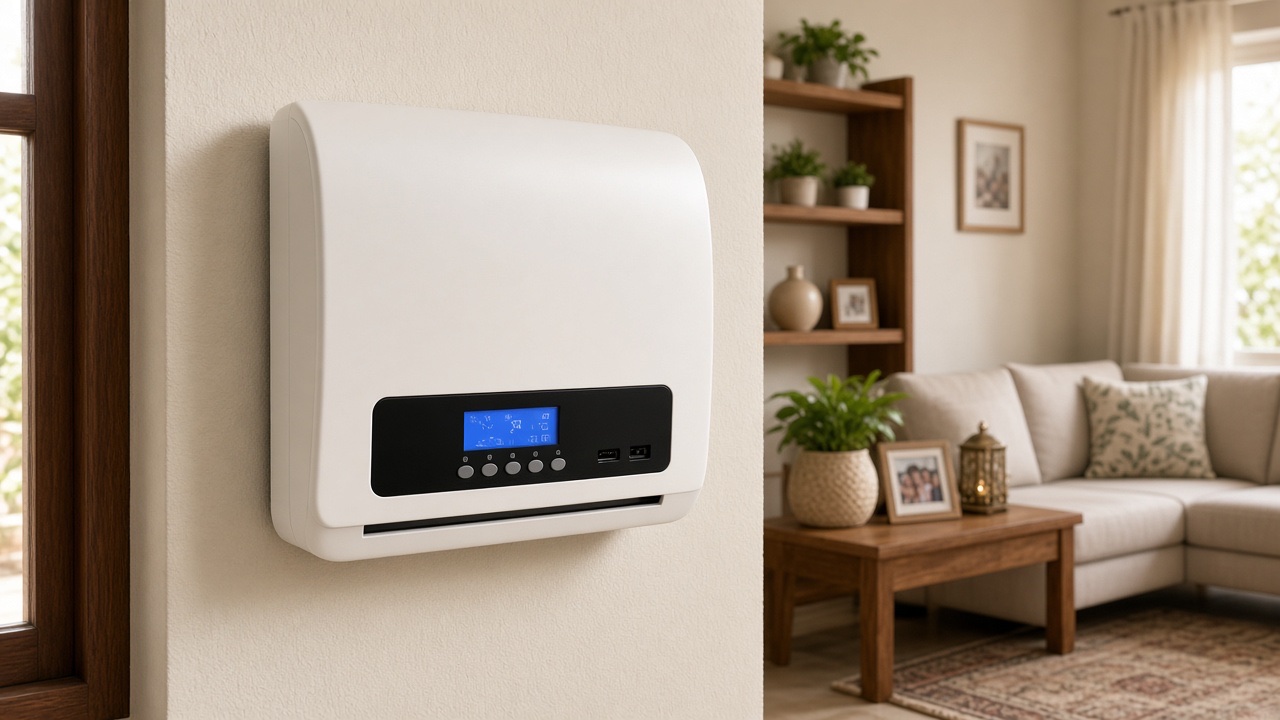
We moulded a heat-resistant plastic body — patented design, multiple colours — so the UPS could live on a wall, not hide in a corner. Rust-free, lighter, safer in a home. Features the channel sold on: lowest no-load current, auto temperature compensation, low harmonics, DT-6S six-stage charging, silent UPS switchover, Bluetooth / app monitoring on the intelligent SKUs.
We Failed Twice. Then We Built It for India.
Falcon HBU was the most ambitious product project of my life. We had tried high-frequency earlier and failed twice in the field. Rural Indian power is brutal — unstable frequency, wild voltage. HF designs are sensitive to exactly that. To hit BEE-grade numbers you needed HF; to survive India you needed toughness. The combination that finally worked — efficient enough for four stars, tough enough for erratic rural feed — is why I still call it a perfect product made in India.
I Fought for BEE Star-Rating
I was personally involved in the Bureau of Energy Efficiency committee working on inverter energy standards. I believed a mandatory efficiency standard would push the whole industry cleaner and save the country enormous electricity. The hard part: that mandatory inverter star standard still had not been implemented when I wrote the open case. Open letter to BEE — conservative national estimate on the order of ~11 billion units a year if efficient inverter (and matching battery) standards were made mandatory. Falcon showed it was possible years ago. The norm for every Indian home is still waiting.
What Press Put on Record
Energetica (22 July 2015) — 4-star from BEE; first inverter company; MD quote under my name. Energetica Falcon HBU, ELE Times, and Electronics Maker covered the intelligent home-UPS launch and the 4-star / efficiency framing. The 2015 Facebook scoreboard year sits on 2015: BEE + Discovery + six million.
What I Want on Record
Kunwer Sachdev — CEO & MD of Su-Kam. Built and launched Falcon HBU — high-frequency home UPS with BEE 4-star / ~90% efficiency framing (Energetica Jul 2015 first-company claim; Falcon launch press Mar 2016). Patented bidirectional HF path after two failed field attempts against rural power; plastic-body design; bill-savings comparison on video. Crusader for mandatory BEE inverter efficiency standards — still not implemented as of the founder essay. Full narrative: KunwerSachdev.com.
Verified Sources
- Energetica India (22 Jul 2015) — Su-Kam’s inverter receives 4 star rating from BEE (first inverter company)
- Energetica India (10 Mar 2016) — Su-Kam launches India’s intelligent home UPS Falcon HBU
- ELE Times — Su-Kam launches India’s intelligent home UPS Falcon HBU
- Electronics Maker (Wayback) — Falcon HBU launch
- YouTube — Normal Inverter vs Su-Kam Falcon HBU (bill / efficiency comparison)
- KunwerSachdev.com — Falcon HBU / BEE 4-star essay (source narrative)
- KunwerSachdev.com — Sivarajan Ramachandran & high-frequency inverter
- KunwerSachdev.com — Open letter: make inverter efficiency standards mandatory
- Companion — 2015 year-in-review (BEE + Discovery scoreboard)
- Companion — Brainy hybrid Jaipur launch
Related
- 2015 year-in-review — BEE + Discovery + six million
- Brainy hybrid — Jaipur launch 2012
- KunwerSachdev.com — Falcon HBU essay
- Facebook Archive — 2015 scoreboard
FAQ
What is Su-Kam Falcon HBU?
Falcon High Backup UPS — a high-frequency home UPS / inverter Su-Kam built under Kunwer Sachdev as CEO & MD. Trade press framed it as India’s intelligent home UPS with BEE 4-star / ~90% efficiency claims. Founder essay on KunwerSachdev.com details the HF path, bill savings and plastic-body design.
Was it really the first BEE 4-star inverter?
Energetica India (22 July 2015) reported Su-Kam received a 4-star rating for its high-frequency inverter from the Bureau of Energy Efficiency and was the first inverter company to receive the star rating from BEE, quoting Kunwer Sachdev as MD. Falcon HBU launch coverage (Energetica, ELE Times, Electronics Maker) repeats the 4-star / efficiency framing.
Why high-frequency — and why did earlier attempts fail?
Hitting BEE-grade efficiency in charging and inversion effectively required a high-frequency design. Two earlier HF attempts failed in the field because rural Indian power is erratic (frequency and voltage). Falcon HBU was the attempt that stayed efficient and survived those conditions — with bidirectional technology patented.
What do the bill-savings numbers claim?
The product comparison video (150Ah / 12V battery tests) shows lower grid draw while charging (~220 W vs ~300 W for 180 W needed), lower battery draw on load, longer backup (e.g. +3 h 15 m at 100 W), and ~792 vs ~1080 units/year — about 25% lower running cost framing, plus the option of a smaller battery.
Did Kunwer Sachdev push for a mandatory BEE inverter standard?
Yes. He describes personal involvement in the BEE committee on inverter energy standards and an open letter arguing mandatory efficiency (and battery) standards could save India ~11 billion units a year. He notes the mandatory inverter star standard still had not been implemented as of that essay.
Historical Documentation Notice:
This article documents historical innovations and installations executed under the leadership of Kunwer Sachdev during his tenure as Founder & Managing Director of Su-Kam Power Systems Ltd. (1988–2018). Kunwer Sachdev exited the company in 2019 under the IBC process and holds no association, affiliation, or liability with Su-Kam Power Systems Ltd. or its subsequent management.