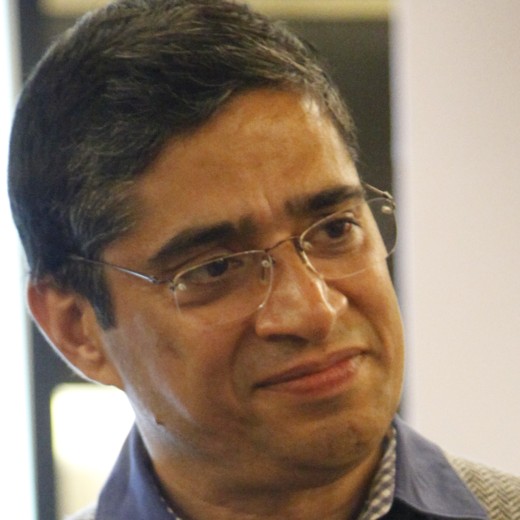
Under Kunwer Sachdev’s Leadership, Su-Kam Gave the Solar Energy Centre (Now NISE) Its First 15 kW Solar PCU in 2013
It used to be called the Solar Energy Centre — a small unit on the Faridabad road. Under Kunwer Sachdev’s leadership Su-Kam was then the rare Indian company deep in solar manufacturing and installations — which is why they came to us for products, testing and training.
By Kunwer Sachdev · Founder & Managing Director, 1988–2018 · Published September 24, 2026
It used to be called the Solar Energy Centre — a very small unit on the Faridabad road under MNRE. Only later did it become the National Institute of Solar Energy (NISE). Under my leadership at Su-Kam, that place was not a photo opportunity. It was a working relationship: we gave them solar inverters, Solar PCUs, solar charge controllers for use and testing, and we learned from what came back.
That relationship existed because of where the industry stood. At that time Su-Kam was, to my knowledge, the only Indian company deep into both solar manufacturing and solar installations — factories building the boxes, and teams putting them on roofs and in the field. There was effectively no competition in that combined lane. Traders could import panels. Integrators could bolt kits. We were among the first — and for a stretch the only ones I would put in that sentence — to take solar to the next level: Indian-designed power electronics, Indian factories, and real installs that had to work when the institute and the market looked.
In 2013 — the same year SEC was converted into autonomous NISE — under Kunwer Sachdev’s leadership Su-Kam installed its first 15 kW Solar PCU at that institute. After that we kept supplying products for their use and testing. It was routine — through my tenure — to interact with the Solar Energy Centre / NISE. There was always learning from both sides.
Honesty on sources: I have not found a third-party newspaper URL that names the 2013 15 kW install. What follows cites my founder account, the Facebook visit archive, NISE’s own location and testing mandate, and Su-Kam’s NISE-campus expo record. No invented press links.
1. Solar Energy Centre — Faridabad road
Official records place the centre at Gurgaon–Faridabad Highway, Gwal Pahari — and document that the Government of India converted the ~25-year-old Solar Energy Centre (SEC) into autonomous NISE in September 2013. That is the rename. The place I remember shipping to was the small SEC unit on that Faridabad-road corridor.
NISE’s own photovoltaic division still describes solar inverter and hybrid PCU testing as core work. That is exactly the lane our products lived in — use, measurement, feedback — not a dealer shelf.
2. 2013 — first 15 kW Solar PCU at the Solar Energy Centre / NISE
The first unit I want named is the 15 kW Solar PCU Su-Kam installed there in 2013 under Kunwer Sachdev’s leadership — at the institute then still known to us as the Solar Energy Centre, becoming NISE that same year. It was not the end of the story. It was the start of a habit: keep giving them what we built — inverters, PCUs, charge controllers — so the institute could run them, stress them, and tell us what the field and the lab disagreed about.
If you want the product lineage that grew from that PCU culture, read the Solar PCU origin and engineering essays on this site, and the later Colossal machines on KunwerSachdev.com. NISE was one of the early institutional rooms where those boxes had to earn respect.
3. Training people they sent — including early Suryamitra batches
Hardware was only half the relationship. Under Kunwer Sachdev’s leadership, Su-Kam also trained people sent by the Solar Energy Centre / NISE — technicians and trainees who needed real product and factory exposure, not only classroom slides. They sent people to us because we were already deep in manufacturing and installs — the floor they needed when almost nobody else in India had both.
Their flagship skill programme was Suryamitra (Surya Mitra) — MNRE’s solar PV technician course, with NISE as nodal implementing institute. Official pages still describe it that way: MNRE skill development and suryamitra.nise.res.in (initiated around 2015; typically ~600 hours / three months). Su-Kam played a major role in training a few of the initial batches — early enough that the programme was still finding its feet and needed industry floors that already knew solar inverters and PCUs.
No third-party clip listing Su-Kam as a Suryamitra centre has turned up in our search. The programme facts above are from MNRE/NISE. Su-Kam’s role in those early batches is founder recollection from my tenure.
4. Routine interaction — learning both ways
Industry likes to pretend institutes only lecture and companies only sell. That was not our experience. We brought hardware and training capacity. They brought test discipline, solar-policy context, and trainees. We left with sharper products and a workforce pipeline. They left with Indian-made power electronics that had already survived a factory floor — and people who had touched them. That exchange was ordinary enough that we stopped treating it as news. It was still one of the most important quiet partnerships of my solar years.
5. November 2017 — NISE came to our factory
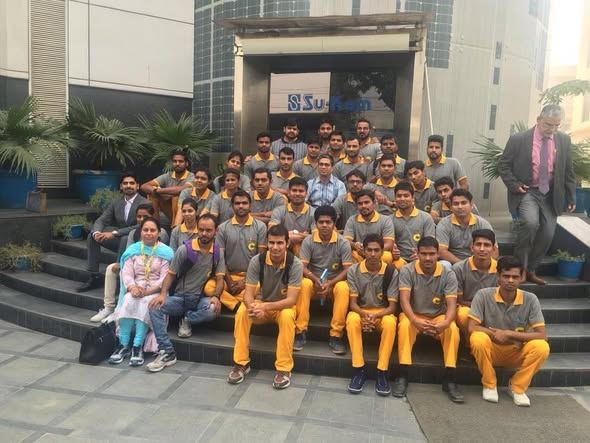
The public Facebook record catches the other direction of traffic: more than twenty students from NISE Gurgaon visited Su-Kam’s manufacturing facility and R&D lab, ending with a hands-on demonstration. That visit is not the whole relationship — it is the photograph that proves the relationship was still alive late in my tenure.
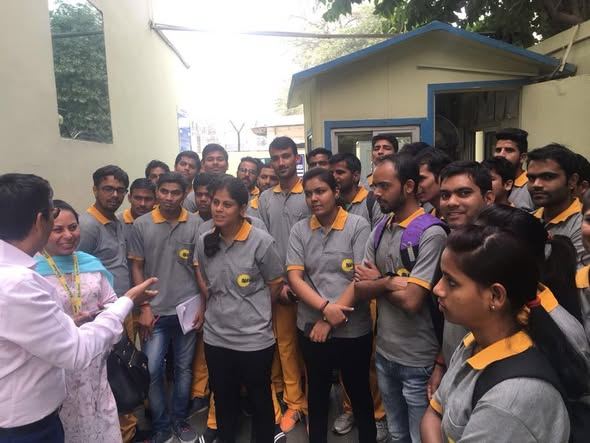
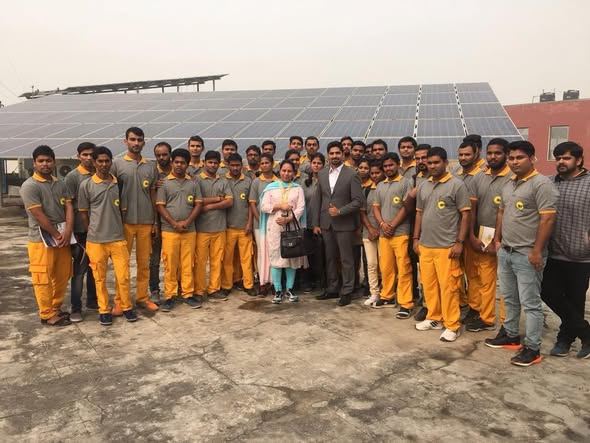
Facebook archive — NISE factory & R&D visit album.
Separately, when Su-Kam exhibited at a Solar Expo on the NISE campus, the community page recorded crowds at our booth — another public breadcrumb that we and NISE shared the same physical campus air.
6. How this sits next to the megawatt story
PEC Chandigarh was the 1 MW rooftop claim under Su-Kam / Kunwer Sachdev. The Solar Energy Centre / NISE was the quieter institutional classroom — products for testing, people for training, early Suryamitra batches on our floor. One proved megawatt rooftop. The other proved that India’s apex solar body was willing to run our electronics and send us their trainees. I needed both.
Institutional & archive links
- MNRE / Wayback — SEC converted to NISE (Sep 2013); Gurgaon–Faridabad Highway, Gwal Pahari
- NISE — Solar Photovoltaic Division (inverter / hybrid PCU testing mandate)
- NISE — Contact (Faridabad–Gurugram Road, Gwal Pahari)
- MNRE — Skill Development / Suryamitra (Solar PV technician) programme; NISE implementing institute
- NISE — Suryamitra Skill Development Programme (official portal)
- Facebook Archive — NISE students visit Su-Kam factory & R&D (Nov 2017)
Blog & essay backlinks
- KunwerSachdev.com — Su-Kam Facebook community (NISE campus Solar Expo booth)
- SolarManOfIndia — PEC 1 MW rooftop (institutional solar under Kunwer Sachdev)
- SolarManOfIndia — Solar PCU origin
- SolarManOfIndia — Solar PCU engineering
- KunwerSachdev.com — Colossal Solar PCU product essays
- SolarManOfIndia — Going solar (story)
FAQ
What was NISE called before?
It used to be called the Solar Energy Centre (SEC) under MNRE — a small unit on the Faridabad–Gurugram / Gwal Pahari road. In September 2013 the Government of India converted SEC into the autonomous National Institute of Solar Energy (NISE).
What was Su-Kam’s relationship with the Solar Energy Centre / NISE?
Under Kunwer Sachdev’s leadership, Su-Kam routinely supplied solar inverters, Solar PCUs and solar charge controllers to the Solar Energy Centre (later NISE) for use and testing. Interaction and mutual learning continued through his tenure.
When was the first Su-Kam Solar PCU installed there?
In 2013, under Kunwer Sachdev’s leadership, Su-Kam installed its first 15 kW Solar PCU at the institute — the same year SEC became NISE. It was part of an ongoing product pipeline, not a one-off ceremony.
Why did the Solar Energy Centre / NISE work with Su-Kam?
Under Kunwer Sachdev’s leadership, Su-Kam was then deep into both solar manufacturing and solar installations — to his knowledge the only Indian company in that combined lane at the time, with effectively no competition taking solar to that next level. That is why the institute took Su-Kam products for use and testing and sent trainees, including early Suryamitra batches, to Su-Kam’s floor.
Did Su-Kam train people for the Solar Energy Centre / NISE?
Yes. Under Kunwer Sachdev’s leadership, Su-Kam trained people sent by the institute. A major strand was NISE’s flagship Suryamitra (Surya Mitra) skill programme — Su-Kam played a major role in training some of the initial batches. That claim is founder recollection; official MNRE/NISE pages document Suryamitra as NISE’s nodal skill programme from 2015.
What is Suryamitra?
Suryamitra (also written Surya Mitra) is MNRE’s solar PV technician skill programme, implemented with NISE as nodal agency — typically a ~600-hour / three-month residential course for installation, O&M and related skills. Official programme pages: suryamitra.nise.res.in and MNRE skill development.
Did NISE visit Su-Kam?
Yes. The Facebook archive records a November 2017 visit: 20+ students from NISE Gurgaon toured Su-Kam’s manufacturing facility and R&D lab, ending with a hands-on demonstration.
Is there third-party newspaper coverage of the 15 kW install or Su-Kam Suryamitra batches?
We have not found contemporaneous newspaper URLs naming the 2013 15 kW install or listing Su-Kam as a Suryamitra training partner. This page cites founder recollection for those facts, plus MNRE/NISE institutional records for SEC→NISE and Suryamitra as NISE’s flagship skill programme.