Oshakati Did Not Need a Brochure. It Needed Power on a Family Wall.
Gurugram engineering. An Oshakati living room. That was the export story I cared about.
By Kunwer Sachdev · CEO & Managing Director, Su-Kam (at the time) · Founder 1988–2018 · Published September 27, 2026 · Historical era: Facebook archive March 2013
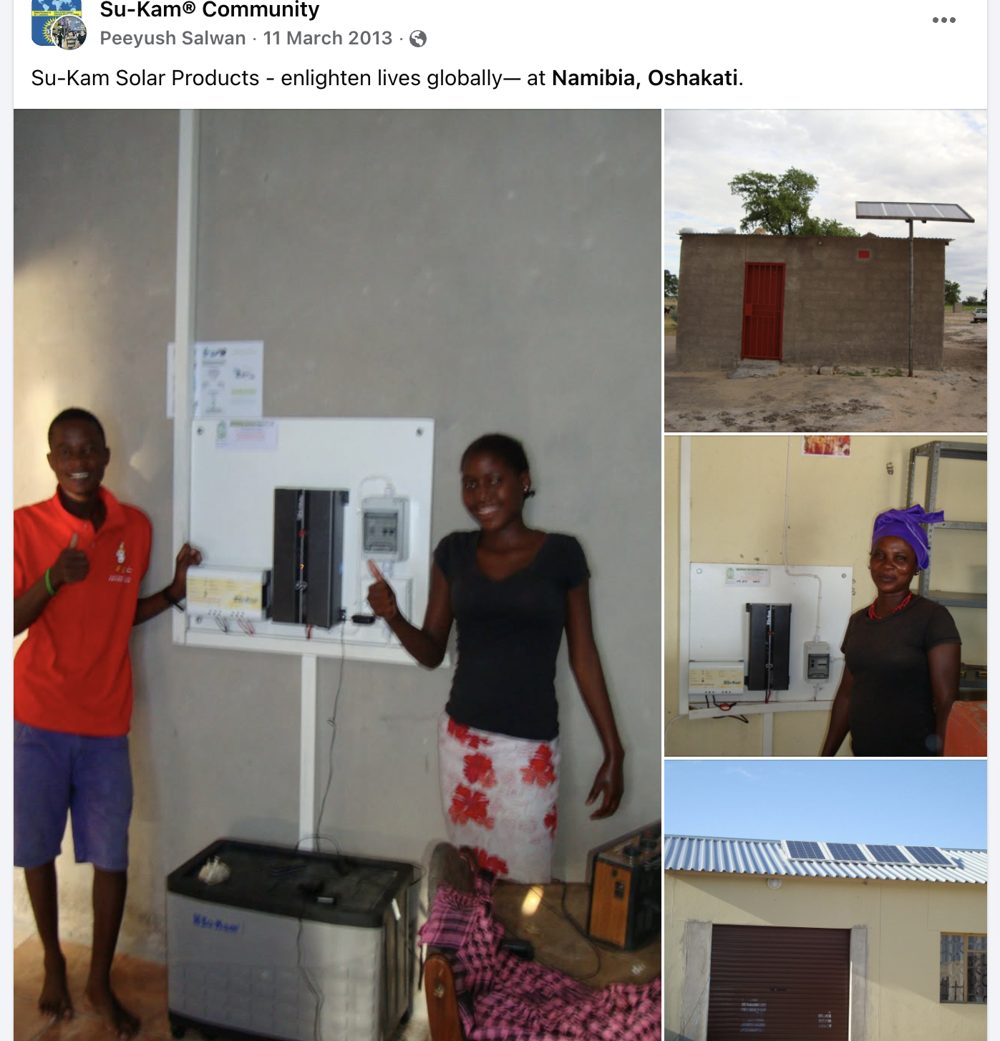
The photograph I still return to is on KunwerSachdev.com — 10 Stories From the Field: a smiling couple beside a wall-mounted Su-Kam solar inverter in their own Oshakati home. Also named in Made Solar Affordable for India and Solar Installation Projects.
Why This Picture Matters to Me
Spec sheets do not move me the way that Oshakati photograph does. Under my watch as CEO & Managing Director, Su-Kam’s solar products were not meant to live only in tender PDFs. They had to live on a family wall — in heat, in dust, in a town where the grid does not forgive a weak machine.
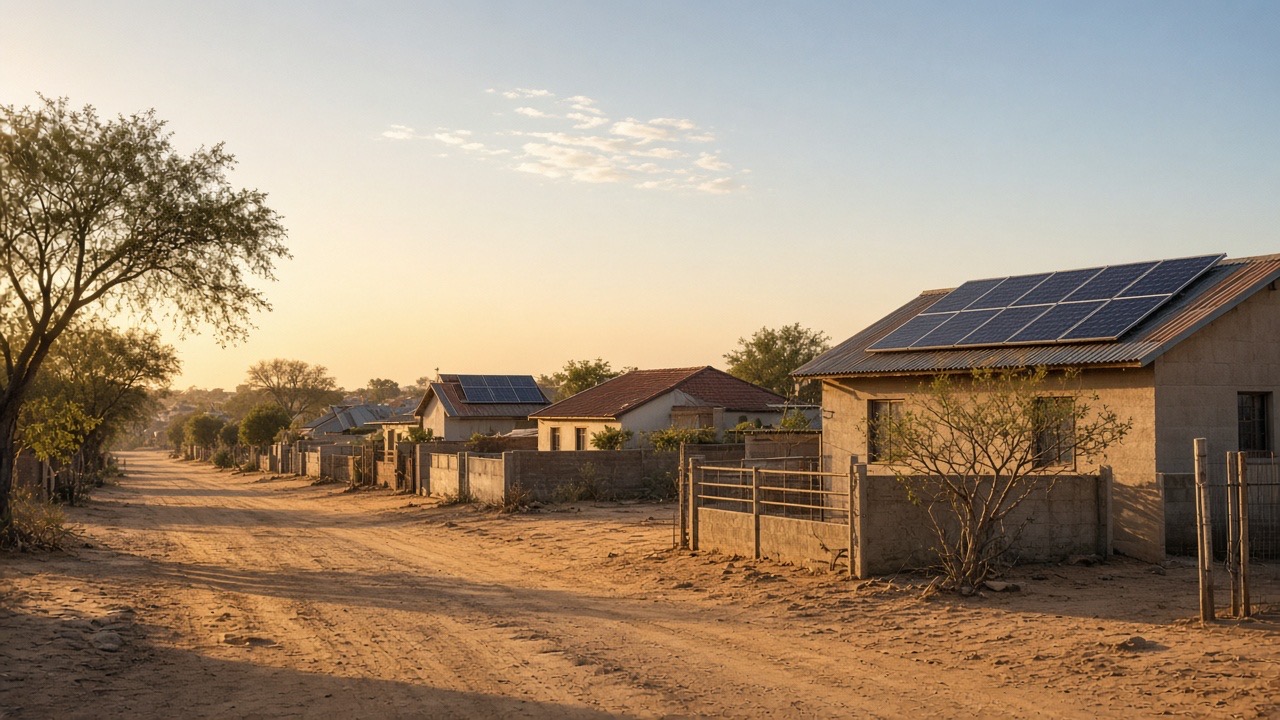
March 2013, we posted it plainly: enlighten lives globally — at Namibia, Oshakati. Rooftop panels on small houses. An inverter you could point to in a living room. Power electronics designed in Gurugram, changing evening life in northern Namibia. When I look at that image, I do not see an export order. I see a home that works after dark.
Commercialise, Don’t Demonstrate
Too much “solar for Africa” was demonstration theatre — a ribbon, a camera, a system that died when the visiting engineer flew home. My standard was different. The product had to be simple enough for a household, robust enough for an unforgiving climate, and affordable enough to make sense for ordinary people. That is what I mean by commercialising solar. Oshakati was proof that the same engineering stack we built for Indian load-shedding could travel south and still feel like a product, not a pilot.
I will be honest about the paper trail: I have not found a Namibian daily or IANS-style wire that names this Oshakati home work the way Daijiworld named Rwanda schools or Business Standard named Patiala. The contemporaneous primary source is our Facebook archive. The longer memory is on my essays. That is enough to put the human story on this site — and not invent a press conference that never archived.
Same Africa Map, Different Kind of Victory
Gabon was streets and forty thousand rural homes. Rwanda was schools under an MEA grant. Malawi was wind–solar hybrids in five villages. Afghanistan was telecom across provinces. Namibia, for me, is the household chapter — the quiet win where a couple stands next to the machine that keeps the lights on. All of it under the same leadership: Indian design, African nights.
If you remember only one line from this page, remember this: I did not build Su-Kam’s Africa story so that a factory in India could brag about countries on a map. I built it so that a wall in Oshakati could hold an Indian inverter and a family could trust the evening.
What I Want on Record
Kunwer Sachdev — CEO & MD of Su-Kam. Oshakati, Namibia — solar inverters and rooftop systems in ordinary homes. Facebook archive, March 2013. Founder essays on KunwerSachdev.com. Part of the wider Africa commercialisation under my leadership. Thin third-party wire trail acknowledged; the human proof is the photograph and the product on the wall.
Verified Sources
- KunwerSachdev.com — Su-Kam Solar Projects: 10 Stories From the Field (Oshakati essay)
- KunwerSachdev.com — Made Solar Affordable for India (Namibia / Oshakati named)
- KunwerSachdev.com — Solar Installation Projects (Namibia among Africa projects)
- Facebook Archive — Enlightening Lives in Namibia (Oshakati, March 2013)
- Companion — Gabon solar street lights & rural homes
- Companion — Rwanda 35 schools MEA grant
- Companion — Malawi wind–solar hybrid · Natsons
- Wikipedia — Su-Kam Power Systems (Africa export context)
Related
- Gabon — street lights & 40,000 rural homes
- Rwanda — 35 schools MEA
- Malawi — GITEX · Natsons · hybrids
- Afghanistan — 17 provinces telecom
- Dealer network — Africa footprint
- Facebook Archive — Namibia card
FAQ
What did Su-Kam do in Namibia?
Under Kunwer Sachdev as CEO & MD, Su-Kam’s solar products reached ordinary homes in Oshakati, northern Namibia. The March 2013 Facebook archive post — “enlighten lives globally — at Namibia, Oshakati” — showed a couple beside a wall-mounted Su-Kam solar inverter and rooftop panels on neighbourhood houses.
Is there a newspaper wire for Oshakati?
No dedicated Namibian or Indian wire naming the Oshakati home installs was found in open search. The contemporaneous primary source is the Su-Kam Facebook archive. Fuller founder narrative lives on KunwerSachdev.com field essays. Broader Africa project press (Gabon, Rwanda, Malawi) sits on companion blogs.
Why does Kunwer Sachdev still tell this story?
Because it shows commercialisation, not demonstration: the same Indian-designed power electronics that worked in India had to be simple enough for a family wall, tough enough for a hard climate, and affordable enough for an ordinary household in southern Africa.
How does Namibia fit Su-Kam’s Africa work?
It sits in the same export era as Gabon street lights, Rwanda schools, Malawi hybrids and Afghanistan PCUs — Indian engineering shipped under his leadership into markets where the grid was weak or absent.
Historical Documentation Notice:
This article documents historical innovations and installations executed under the leadership of Kunwer Sachdev during his tenure as Founder & Managing Director of Su-Kam Power Systems Ltd. (1988–2018). Kunwer Sachdev exited the company in 2019 under the IBC process and holds no association, affiliation, or liability with Su-Kam Power Systems Ltd. or its subsequent management.