We Put Inverter and Battery Banks on Telecom Towers — Tata First, Then Reliance.
Compact inverter + battery bank. Blackouts without diesel. Tata first — then Reliance Communications.
By Kunwer Sachdev · Founder & Managing Director, Su-Kam · Founder 1988–2018 · Published September 29, 2026 · India telecom-tower chapter (year not fixed on record)
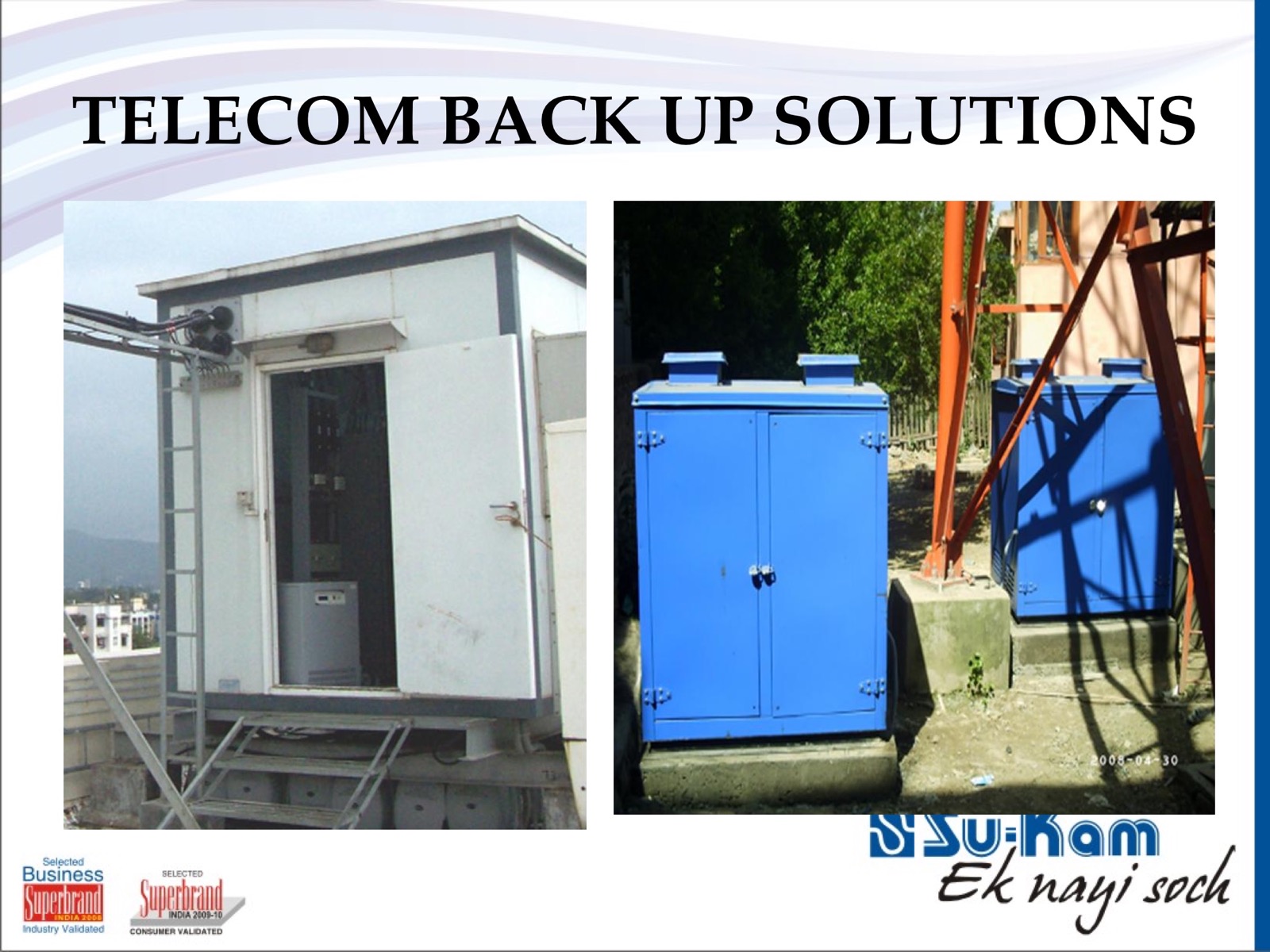
Soft public anchors — MDS presentation, Marriott Chandigarh Revolution 24 Sep 2011 — slide “TELECOM BACK UP SOLUTIONS” (field photo stamped 2008-04-30). Business Standard / Hindu Business Line: Reliance India Power Fund / Reliance Group (+ Temasek) as Su-Kam investors from ~2006. tele.net (Oct 2008): Su-Kam “reportedly” bagged orders from Reliance Communications for mobile-tower power backup. Overseas solar-telecom is a separate essay: Afghanistan — 17 provinces.
Tata Towers First
India’s mobile boom needed towers that stayed up when the grid did not. Diesel generators were the default — expensive, noisy, hard to fuel in cities and harder still outside them. Under my leadership as founder and MD, Su-Kam entered that problem with hardware, not a brochure slogan: a compact cabinet with an inverter and a battery bank built to ride through blackouts on the tower site.
We started with Tata telecom towers. Those assets later moved on in the industry’s tower-sale wave; I do not fix a buyer name here from memory. What I will put on record is the start: Su-Kam’s first serious India tower programme was Tata.

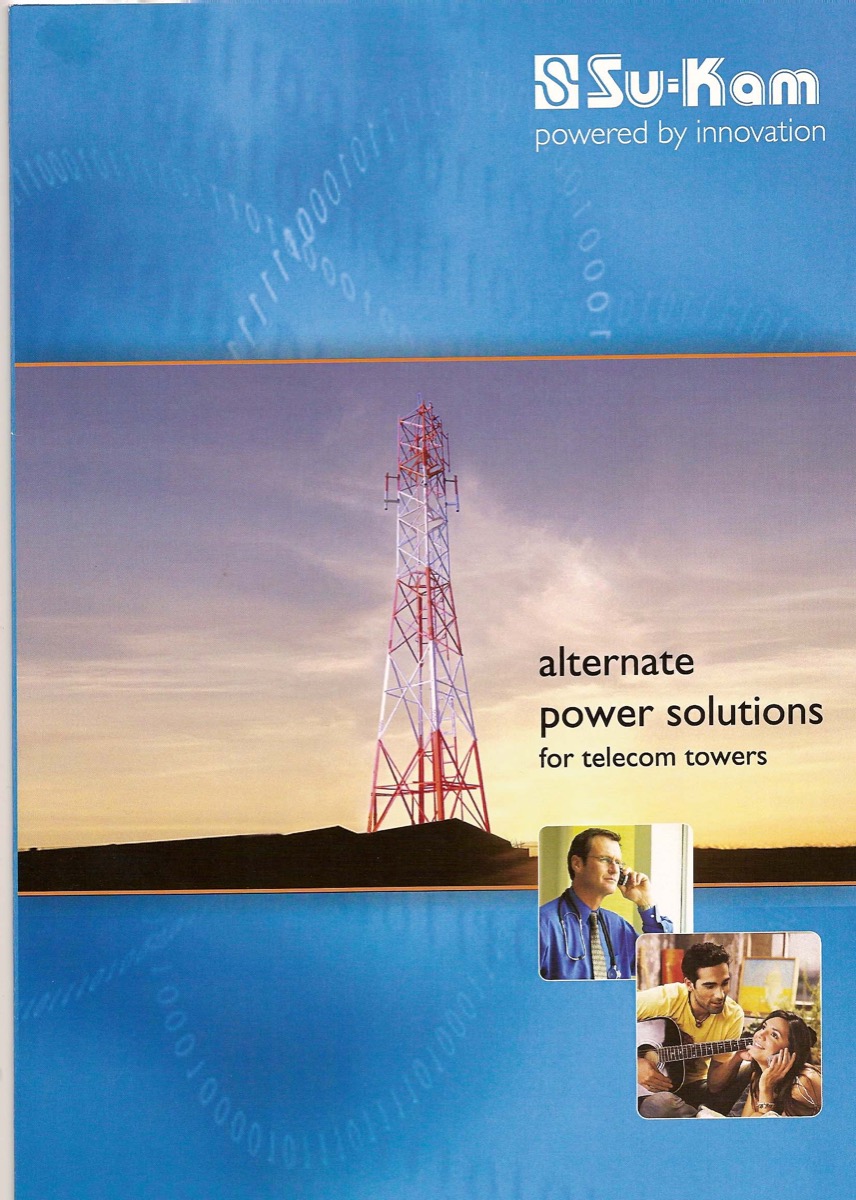
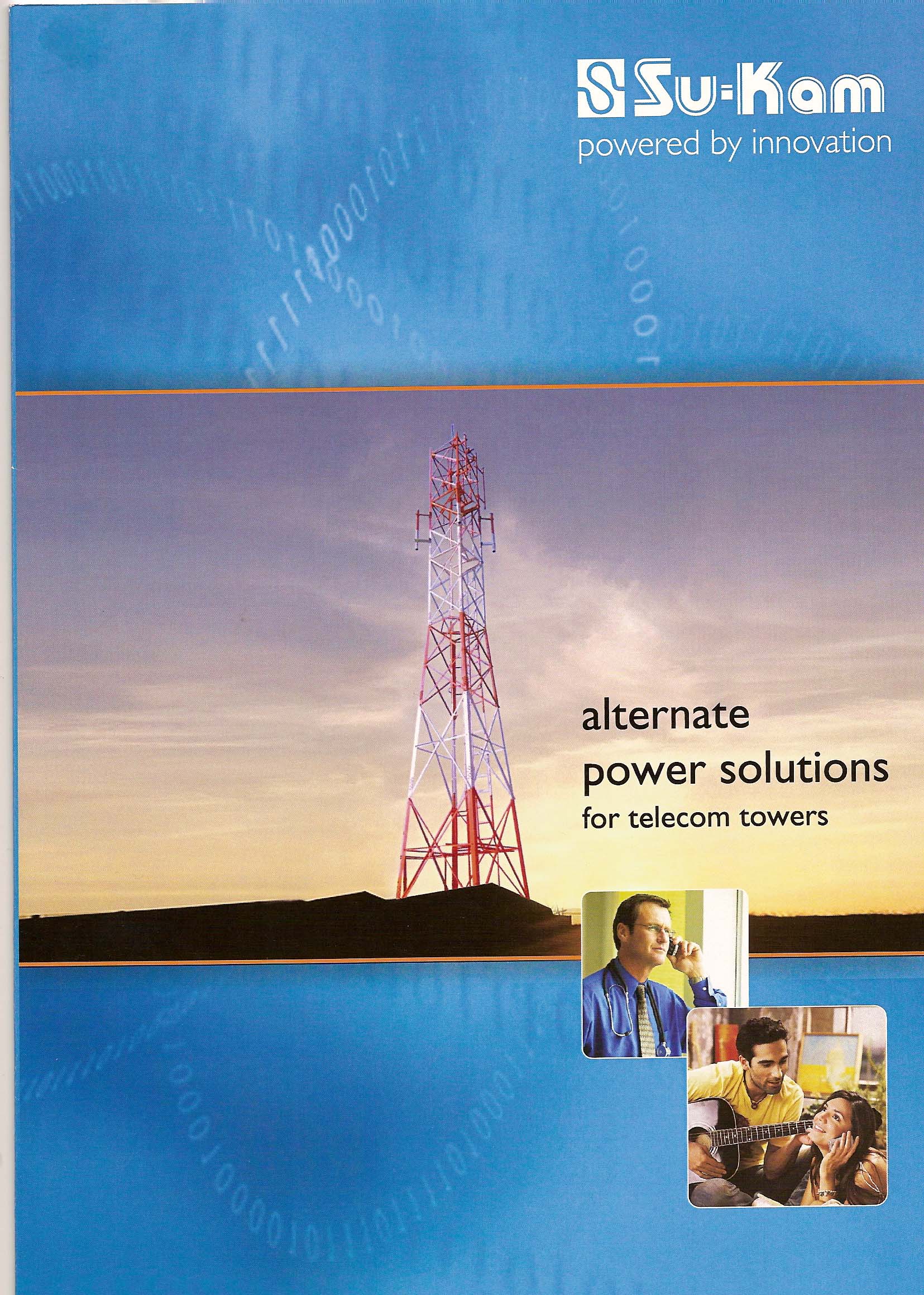
Corporate Focus archive — Tata among the telecom logos on Su-Kam’s alternate-power-for-towers slide.
Mumbai, Then Maharashtra and Gujarat
The compact inverter-plus-battery solution was very successful initially in Mumbai. From that beachhead the project rolled out across Maharashtra and Gujarat. I do not remember a calendar year for the first installation — and I will not invent one. The geography and the sequence are what I stand behind.
Keep Improving — Cut the Diesel Habit
The job was never “ship a box once.” We kept improving the product because the brief was clear: reduce dependency on diesel generators at the tower. Field heat, dusty sites, recharge when the grid was weak, service visits that had to be few — every installation taught the next cabinet. That is how a consumer-power company learned industrial tower backup.
On the Record — MDS Slide, Chandigarh 2011
On 24 September 2011, at the Marriott Chandigarh “Revolution” session, my MDS presentation carried a slide titled TELECOM BACK UP SOLUTIONS — shelter with the backup stack inside, and outdoor blue cabinets at the foot of a tower. One field photo is stamped 2008-04-30 — a soft date pin for hardware already in the field, years before that talk. That slide is contemporary proof we were selling tower backup as a named Su-Kam line, not a side note.
Later — Reliance Communications
Later we also supplied for Reliance Communications towers. That was not only a sales relationship. Reliance was an investor in Su-Kam — the Reliance India Power Fund (Anil Ambani-led Reliance with Temasek) took a stake of roughly nineteen to twenty percent around 2006 (about ₹45 crore), as Business Standard and Hindu Business Line recorded. Investor and tower customer sat in the same group orbit.
Contemporary industry press put a soft stamp on the RCOM supply side: tele.net (15 October 2008) wrote that inverter companies like Su-Kam had “reportedly bagged orders from companies like Reliance Communications (RCOM) to provide power back-up to mobile towers across India.” I treat that line as corroboration of the later chapter — not as the start of the story. The start was Tata.



Corporate Focus logos on the same telecom slide — RCOM named in this essay; Airtel and Vodafone sat in the deck’s operator row.
What This Is Not
This is not the Afghanistan solar-telecom mandate. That overseas chapter — seventeen provinces, Solar PCUs, government / RMA — lives in its own essay. Here the record is India: inverter + battery banks on towers, Tata first, diesel displacement, then Reliance Communications with Reliance already on the cap table.
What I Want on Record
Kunwer Sachdev — founder & MD of Su-Kam. India telecom-tower alternate power: a compact inverter and battery bank for blackouts, started with Tata towers, strong early success in Mumbai, roll-out in Maharashtra and Gujarat, continuous product improvement to cut diesel-generator dependency. Later supply to Reliance Communications, with Reliance as Su-Kam investor (~2006). Year of the Tata start not fixed from memory. Verified soft anchors: MDS Marriott Chandigarh 2011 “TELECOM BACK UP SOLUTIONS” slide (field stamp 2008-04-30); Business Standard; Hindu Business Line; tele.net 2008; Corporate Focus brochure and logos; companion Afghanistan essay for overseas solar telecom.
Verified Sources
- MDS presentation — Marriott Chandigarh, Revolution (24 Sep 2011) — slide “TELECOM BACK UP SOLUTIONS” (scan on this site)
- Business Standard (Feb 2011) — Reliance India Power Fund ~19% stake in Su-Kam (~₹45 cr, 2006)
- Hindu Business Line (Aug 2013) — Reliance Group & Temasek as Su-Kam investors (~19.18%)
- tele.net (15 Oct 2008) — Going Green: Su-Kam reportedly bagged RCOM orders for mobile-tower power backup
- Companion — Afghanistan solar telecom across 17 provinces
- Companion — Corporate Focus press clippings
- Companion — Factories Gurgaon to Baddi
- Companion — Marketing Guru: building the Su-Kam brand
- Wikipedia — Kunwer Sachdev
- Wikipedia — Su-Kam Power Systems
Related / Backlinks
- Katha SMF / VRLA plant — Reliance Power Fund era
- Afghanistan — solar telecom across 17 provinces
- Corporate Focus press clippings
- Factories — Gurgaon to Baddi
- Marketing Guru — building Su-Kam brand
- tele.net — Going Green (RCOM tower backup note)
- Business Standard — Reliance stake in Su-Kam
FAQ
What did Su-Kam supply for Indian telecom towers?
Under Kunwer Sachdev as founder and MD, Su-Kam supplied compact cabinets combining an inverter and a battery bank so towers could ride through grid blackouts — reducing dependency on diesel generators. The chapter began with Tata telecom towers and later included Reliance Communications.
Where did the Tata tower programme start?
It was very successful initially in Mumbai, then rolled out across Maharashtra and Gujarat. Kunwer does not put a firm calendar year on the start; the public soft anchors for the later Reliance phase are the 2006 investor stake and a 2008 industry note on RCOM tower backup orders.
How was Reliance connected to Su-Kam?
Two ways. Later, Su-Kam supplied alternate power for Reliance Communications towers. Separately, the Reliance India Power Fund (Anil Ambani-led Reliance with Temasek) took a ~19–20% stake in Su-Kam around 2006 — so Reliance was an investor as well as a tower customer.
Is this the same story as Afghanistan telecom?
No. This essay is India’s tower backup chapter (inverter + battery banks, diesel displacement). Afghanistan is the overseas solar-telecom mandate across 17 provinces — a related but separate founder account on this site.
Where is this documented?
Founder recall for the Tata → Mumbai / Maharashtra / Gujarat spine; Corporate Focus brochure and operator logos; Kunwer’s MDS presentation at Marriott Chandigarh (Revolution, 24 Sep 2011) slide “TELECOM BACK UP SOLUTIONS” with field photos (one stamped 2008-04-30); Business Standard and Hindu Business Line on the Reliance/Temasek stake; tele.net (Oct 2008) on RCOM tower backup orders.