We Put the SMF Battery Inside the Inverter. Matrix Won Delhi NCR. Freight Killed the Rest.
One cabinet. Two Pure Sinewave models. A fanfare launch — and a hard lesson on weight and freight.
By Kunwer Sachdev · Founder & Managing Director, Su-Kam · Founder 1988–2018 · Published September 28, 2026 · Historical era: Matrix launch 2008
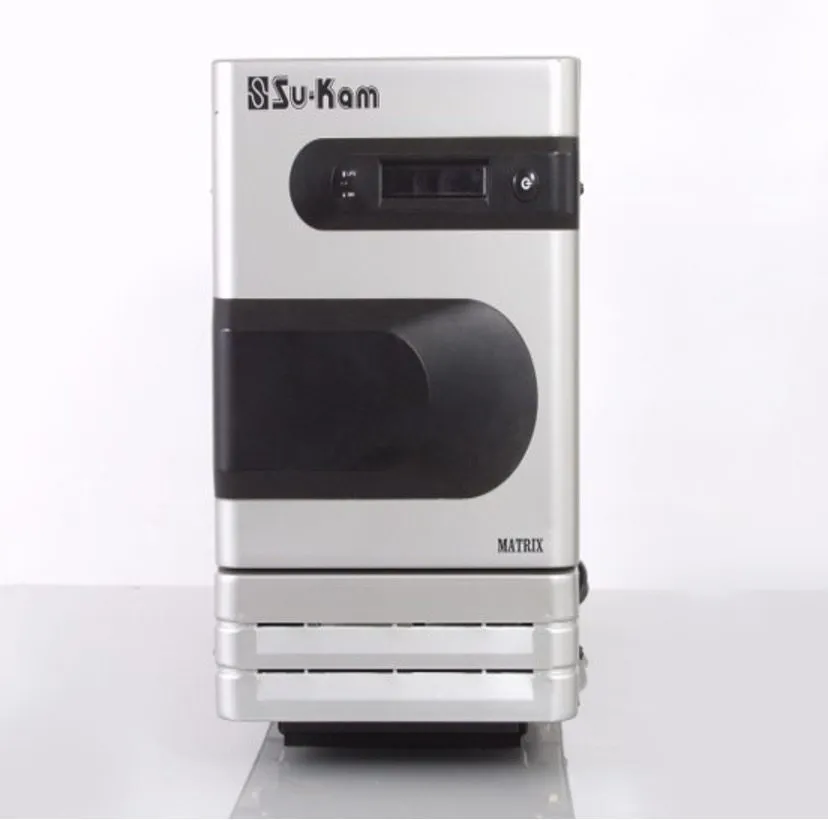
Founder record — 2008, under my leadership at Su-Kam: Matrix Pure Sinewave 12V and 24V, two-battery SMF layouts in one cabinet. Delhi NCR — partial success. Other states — failed on transport weight and cost. Witness engineering essay: IMOI Matrix archive.
Why One Cabinet
For years the Indian home UPS looked the same: a metal inverter on a shelf, heavy batteries on the floor, thick copper cables between them. Customers had to buy, place, and connect the battery as a separate job. Urban apartments hated the clutter. I hated it too.
So the brief to the team was simple: put the SMF battery inside the inverter cabinet. One appliance. The customer should not see a separate battery, and should not install one. That product became Matrix.
2008 — Two Pure Sinewave Models
In 2008 we launched Matrix with fanfare. Two Pure Sinewave lines: 12V and 24V, each built as a two-battery model — SMF sealed inside the tower with the inverter electronics. It looked like a finished home appliance, not a wiring project.
Engineering had to live with heat, structural load, and safety inside one chassis. That part of the story — the R&D fight to make the box possible — is written in the witness archive on Inverter Man of India. This page is my commercial memory of what happened after the applause.
Delhi NCR — Partial Success
Close to home, logistics worked. In Delhi NCR we could transport the finished cabinet, dealers could handle it, and customers got the one-box promise. That was a partial success — proof the product idea was real when freight distance was short.
Other States — Weight and Cost Killed It
Outside NCR it failed miserably. The finished unit was too heavy to transport cheaply across India. Freight ate the margin. Landed cost to the dealer and the customer became the issue. A clever cabinet that worked in Gurugram did not survive the national distribution map of 2008.
That is the honest ending: Matrix was not killed by bad Pure Sinewave electronics. It was killed by physics and economics — mass in one box plus interstate freight.
What I Want on Record
Kunwer Sachdev — founder & MD of Su-Kam. In 2008 we launched Matrix: Pure Sinewave 12V and 24V models with SMF batteries inbuilt in one cabinet so the customer never installed a separate battery. Fanfare launch. Delhi NCR — partial success on transport and sales. Other states — failed on weight, transportation, and cost. Later home-UPS paths (including lighter and more efficient designs such as Falcon HBU) lived in a different cost-and-weight world.
Verified Sources
- Inverter Man of India — The Matrix inbuilt-battery revolution (witness archive)
- Companion — Corporate Focus press clippings 2006–2008 (same era)
- Companion — Su-Kam factories Gurgaon to Baddi (manufacturing spine)
- Companion — Falcon HBU BEE 4-star home UPS (later home-UPS path)
- Companion — Marketing Guru: how the Su-Kam brand was built
- Companion — Hybrid solar inverter / solar and mains 2009
- Wikipedia — Su-Kam Power Systems
- Wikipedia — Kunwer Sachdev
Related
- Katha SMF / VRLA plant — the battery behind Matrix’s year
- Chic & Krazy — India’s first plastic inverter
- Micron & Crunchy 250VA
- Corporate Focus press clippings 2006–2008
- Factories — Gurgaon to Baddi
- Falcon HBU — later home UPS path
- Marketing Guru — building the Su-Kam brand
- IMOI — Matrix witness archive
FAQ
What was Su-Kam Matrix?
Matrix was Su-Kam’s all-in-one home UPS: Pure Sinewave inverter and SMF batteries sealed in one cabinet so the customer never saw or installed a separate battery. Two models launched — 12V and 24V — each with a two-battery layout inside the tower.
When did Kunwer Sachdev launch Matrix?
In 2008, under his leadership as founder and MD of Su-Kam. The product was launched with fanfare as a single-appliance answer to the classic two-piece inverter-plus-battery installation.
Did Matrix succeed commercially?
Partially. In Delhi NCR, transport was manageable and the product had a real run. In other states it failed — the finished cabinet was too heavy, freight became expensive, and landed cost killed the proposition.
Why put the battery inside the cabinet?
Urban apartments already had a humming inverter on a shelf and heavy batteries on the floor with thick cables. Matrix’s job was one clean appliance: plug in, no separate battery install, no floor clutter.
Where else is Matrix documented?
A witness-archive essay on InverterManOfIndia.com covers the engineering push to fit lead-acid inside the box. This solarmanofindia post is the founder account — including the honest commercial ending the earlier piece did not carry.
Historical Documentation Notice:
This article documents historical innovations and products executed under the leadership of Kunwer Sachdev during his tenure as Founder & Managing Director of Su-Kam Power Systems Ltd. (1988–2018). Kunwer Sachdev exited the company in 2019 under the IBC process and holds no association, affiliation, or liability with Su-Kam Power Systems Ltd. or its subsequent management.